Ancient City Discovered Underwater Solves Enigma That Puzzled Egyptologists For Years

by 

An ancient Egyptian city found 6.5 km off of modern Egypt’s coastline reveals fascinating relics of Heracleion, also known as Thonis. The city’s ruins are located in Abu Qir Bay, originally existing near Alexandria, 2.5 km off the coast. Heracleion’s ruins span an area that is 11km by 15km – deservedly so considering the classical tale of Heracleion which was said to be a prosperous, brilliant, thriving city before it was engulfed by the sea around 1,500 years ago.

map

The ruins were first discovered by Franck Goddio using his unique survey-based approach that utilizes the most sophisticated technical equipment. In cooperation with the Egyptian Supreme Council of Antiquities, Oxford’s Centre for Maritime Archaeology and the Department of Antiquities of Egypt, Franck was able to locate, map and excavate several parts of the city.
Franck’s discovery accomplished many things including uncovering important information about the ancient landmarks of Thonis-Heracleion, such as the grand temple of Amun and his son Khonsou (Herakles for the Greeks), the harbours that once controlled all trade into Egypt, and the daily life of its inhabitants. Through his discovery he was able to solve a historic enigma that has baffled Egyptologists for years, that Heracleion and Thonis were actually the same city with two different names.
As you will see in the pictures, the relics recovered from the excavations boldly reveal the cities’ beauty and glory before it was buried by water. Anything from colossal statues, inscriptions and architectural elements, jewellery and coins, ritual objects and ceramics, were found and each reveals the opulence Heracleion experienced during its time. Many of the finds illustrate how crucial this city was to the ancient world economy. This is also seen by the huge amount of gold coins and bronze, lead and stone weights used to measure value of goods in ancient times. The importance of Heracleion has also been proved by the discovery of 64 ships, which is the largest number of ancient vessels ever found in one place. Along with these ships, a mind-boggling 700 anchors were found on the ocean floor.
The discoveries include a huge statue of the god Hapi, a statue of the classic Egyptian goddess Isis, a head of an unidentified Pharaoh and a number of smaller statues of Egyptian gods, figures and queens. Interestingly, dozens of sarcophagi containing the bodies of mummified animals sacrificed to Amun-Gereb were found. According to Egyptian history, Amun-Gereb is the supreme god of the Egyptians.
While it may not be the discovery of the coveted Atlantis, this discovery certainly has its own profoundness and beauty.

underwater-statues4

Colossus of a Ptolemaic queen made out of red granite. The whole statue measures 490 cm in height and weighs 4 tons. It was found close to the big temple of sunken Heracleion.
©Franck Goddio/Hilti Foundation, photo: Christoph Gerigk

underwater-city9

Head of a colossal statue of red granite (5.4 m) representing the god Hapi, which decorated the temple of Heracleion. The god of the flooding of the Nile, symbol of abundance and fertility, has never before been discovered at such a large scale, which points to his importance for the Canopic region.
©Franck Goddio/Hilti Foundation, photo: Christoph Gerigk
sunken_city_found1
Franck Goddio and his team with a colossal statue of red granite (5.4 m) representing the god Hapi, which decorated the temple of Heracleion. The god of the flooding of the Nile, symbol of abundance and fertility, has never before been discovered at such a large scale, which points to his importance for the Canopic region.
©Franck Goddio/Hilti Foundation, photo: Christoph Gerigk

underwater-city8

An archaeologist measures the feet of a colossal red granite statue at the site of Heracleion discovered in Aboukir Bay.
©Franck Goddio/Hilti Foundation, photo: Christoph Gerigk

underwater-city7

Bronze oil lamp (late Hellenistic period, about 2nd century BC) discovered in the temple of Amun.
©Franck Goddio/Hilti Foundation, photo: Christoph Gerigk

underwater-city10


Franck Goddio with the intact and inscribed Heracleion stele (1.90 m). It was commissioned by Nectanebo I (378-362 BC) and is almost identical to the Naukratis Stele in the Egyptian Museum in Cairo. The place where it was to be situated is clearly named: Thonis-Heracleion.
©Franck Goddio/Hilti Foundation, photo: Christoph Gerigk

underwater-city5

A gold vessel (Phiale) recovered from Thonis-Heracleion. Phiale were shallow dishes used throughout the Hellenistic world for drinking and pouring libations.
©Franck Goddio/Hilti Foundation, photo: Christoph Gerigk

underwater-city6

Bronze statuette of pharaoh of the 26th dynasty, found at the temple of Amon area at Heracleion. The sovereign wears the “blue crown” (probably the crown of the accession). His dress is extremely simple and classical: the bare-chested king wears the traditional shendjyt kilt or loincloth.
©Franck Goddio/Hilti Foundation, photo: Christoph Gerig

underwater-city-discovered

Franck Goddio and divers of his team are inspecting the statue of a pharaoh. The colossal statue is of red granite and measures over 5 metres. It was found close to the big temple of sunken Heracleion.
©Franck Goddio/Hilti Foundation, photo: Christoph Gerigk

Head of a pharaoh statue is raised to the surface. The colossal statue is of red granite and measures over 5 metres. It was found close to the big temple of sunken Heracleion.  ©Franck Goddio/Hilti Foundation, photo: Christoph Gerigk

Head of a pharaoh statue is raised to the surface. The colossal statue is of red granite and measures over 5 metres. It was found close to the big temple of sunken Heracleion.
©Franck Goddio/Hilti Foundation, photo: Christoph Gerigk
Bronze statue of Osiris, the assassinated and resurrected king-god. It is adorned with the atef crown. The typical insignia of power (crook and flail) are missing. Its open eyes are accentuated by fine gold sheets.  ©Franck Goddio/Hilti Foundation, photo: Christoph GerigkBronze statue of Osiris, the assassinated and resurrected king-god. It is adorned with the atef crown. The typical insignia of power (crook and flail) are missing. Its open eyes are accentuated by fine gold sheets.
©Franck Goddio/Hilti Foundation, photo: Christoph Gerigk

isis

The statue of the Goddess Isis sits on display on a barge in an Alexandrian naval base.
Sources
http://www.thetimetravellers.org.uk/Egypts%20Lost%20City.pdf
http://www.franckgoddio.org/projects/sunken-civilizations/heracleion.html
About the author Joe Martino:  I created Collective Evolution 4 years ago and have been heavily at it since. I love inspiring others to find joy and make changes in their lives. Hands down the only other thing I am this passionate about is baseball. Feel free to email me at joe@collective-evolution.com


Beyond Left & Right: Escaping the Matrix

WIKI-Matrix-01

The defining dramatic moment in the film The Matrix occurs just after Morpheus invites Neo to choose between a red pill and a blue pill. The red pill promises “the truth, nothing more.” Neo takes the red pill and awakes to reality – something utterly different from anything Neo, or the audience, could have expected. What Neo had assumed to be reality turned out to be only a collective illusion, fabricated by the Matrix and fed to a population that is asleep, cocooned in grotesque embryonic pods. In Plato’s famous parable about the shadows on the walls of the cave, true reality is at least reflected in perceived reality. In the Matrix world, true reality and perceived reality exist on entirely different planes.

The story is intended as metaphor, and the parallels that drew my attention had to do with political reality. This article offers a particular perspective on what’s going on in the world – and how things got to be that way – in this era of globalization. From that red-pill perspective, everyday media-consensus reality – like the Matrix in the film – is seen to be a fabricated collective illusion. Like Neo, I didn’t know what I was looking for when my investigation began, but I knew that what I was being told didn’t make sense. I read scores of histories and biographies, observing connections between them, and began to develop my own theories about roots of various historical events. I found myself largely in agreement with writers like Noam Chomsky and Michael Parenti, but I also perceived important patterns that others seem to have missed.

When I started tracing historical forces, and began to interpret present-day events from a historical perspective, I could see the same old dynamics at work and found a meaning in unfolding events far different from what official pronouncements proclaimed. Such pronouncements are, after all, public relations fare, given out by politicians who want to look good to the voters. Most of us expect rhetoric from politicians, and take what they say with a grain of salt. But as my own picture of present reality came into focus, “grain of salt” no longer worked as a metaphor. I began to see that consensus reality – as generated by official rhetoric and amplified by mass media – bears very little relationship to actual reality. “The matrix” was a metaphor I was ready for.

In consensus reality (the blue-pill perspective) “left” and “right” are the two ends of the political spectrum. Politics is a tug-of-war between competing factions, carried out by political parties and elected representatives. Society gets pulled this way and that within the political spectrum, reflecting the interests of whichever party won the last election. The left and right are therefore political enemies. Each side is convinced that it knows how to make society better; each believes the other enjoys undue influence; and each blames the other for the political stalemate that apparently prevents society from dealing effectively with its problems.This perspective on the political process, and on the roles of left and right, is very far from reality. It is a fabricated collective illusion. Morpheus tells Neo that the Matrix is “the world that was pulled over your eyes to hide you from the truth…. As long as the Matrix exists, humanity cannot be free.” Consensus political reality is precisely such a matrix. Later we will take a fresh look at the role of left and right, and at national politics. But first we must develop our red-pill historical perspective. I’ve had to condense the arguments to bare essentials; please see the annotated sources at the end for more thorough treatments of particular topics.

Imperialism and the Matrix

From the time of Columbus to 1945, world affairs were largely dominated by competition among Western nations seeking to stake out spheres of influence, control sea lanes, and exploit colonial empires. Each Western power became the core of an imperialist economy whose periphery was managed for the benefit of the core nation. Military might determined the scope of an empire; wars were initiated when a core nation felt it had sufficient power to expand its periphery at the expense of a competitor. Economies and societies in the periphery were kept backward – to keep their populations under control, to provide cheap labour, and to guarantee markets for goods manufactured in the core. Imperialism robbed the periphery not only of wealth but also of its ability to develop its own societies, cultures, and economies in a natural way for local benefit.

The driving force behind Western imperialism has always been the pursuit of economic gain, ever since Isabella commissioned Columbus on his first entrepreneurial voyage. The rhetoric of empire concerning wars, however, has typically been about other things – the White Man’s Burden, bringing true religion to the heathens, Manifest Destiny, defeating the Yellow Peril or the Hun, seeking lebensraum, or making the world safe for democracy. Any fabricated motivation for war or empire would do, as long as it appealed to the collective consciousness of the population at the time. The propaganda lies of yesterday were recorded and became consensus history – the fabric of the matrix.

While the costs of territorial empire (fleets, colonial administrations, etc.) were borne by Western taxpayers generally, the profits of imperialism were enjoyed primarily by private corporations and investors. Government and corporate elites were partners in the business of imperialism: empires gave government leaders power and prestige, and gave corporate leaders power and wealth. Corporations ran the real business of empire while government leaders fabricated noble excuses for the wars that were required to keep that business going. Matrix reality was about patriotism, national honour, and heroic causes; true reality was on another plane altogether: that of economics.Industrialisation, beginning in the late 1700s, created a demand for new markets and increased raw materials; both demands spurred accelerated expansion of empire. Wealthy investors amassed fortunes by setting up large-scale industrial and trading operations, leading to the emergence of an influential capitalist elite. Like any other elite, capitalists used their wealth and influence to further their own interests however they could. And the interests of capitalism always come down to economic growth; investors must reap more than they sow or the whole system comes to a grinding halt.

Thus capitalism, industrialisation, nationalism, warfare, imperialism – and the matrix – coevolved. Industrialised weapon production provided the muscle of modern warfare, and capitalism provided the appetite to use that muscle. Government leaders pursued the policies necessary to expand empire while creating a rhetorical matrix, around nationalism, to justify those policies. Capitalist growth depended on empire, which in turn depended on a strong and stable core nation to defend it. National interests and capitalist interests were inextricably linked – or so it seemed for more than two centuries.

World War II and Pax Americana

1945 will be remembered as the year World War II ended and the bond of the atomic nucleus was broken. But 1945 also marked another momentous fission – breaking of the bond between national and capitalist interests. After every previous war, and in many cases after severe devastation, European nations had always picked themselves back up and resumed their competition over empire. But after World War II, a Pax Americana was established. The US began to manage all the Western peripheries on behalf of capitalism generally, while preventing the communist powers from interfering in the game. Capitalist powers no longer needed to fight over investment realms, and competitive imperialism was replaced by collective imperialism (see sidebar below). Opportunities for capital growth were no longer linked to the military power of nations, apart from the power of America.

In his  Killing Hope: U.S. Military and CIA Interventions Since World War II  (see recommended reading), William Blum chronicles hundreds of significant covert and overt interventions, showing exactly how the US carried out its imperial management role.In the postwar years matrix reality diverged ever further from actual reality. In the postwar matrix world, imperialism had been abandoned and the world was being “democratised”; in the real world, imperialism had become better organised and more efficient. In the matrix world the US “restored order,” or “came to the assistance” of nations which were being “undermined by Soviet influence”; in the real world, the periphery was being systematically suppressed and exploited. In the matrix world, the benefit was going to the periphery in the form of countless aid programs; in the real world, immense wealth was being extracted from the periphery.

Growing glitches in the matrix weren’t noticed by most people in the West, because the postwar years brought unprecedented levels of Western prosperity and social progress. The rhetoric claimed progress would come to all, and Westerners could see it being realised in their own towns and cities. The West became the collective core of a global empire, and exploitative development led to prosperity for Western populations, while generating immense riches for corporations, banks, and wealthy capital investors.

Glitches in the Matrix, Popular Rebellion, and Neoliberalism

The parallel agenda of Third-World exploitation and Western prosperity worked effectively for the first two postwar decades. But in the 1960s large numbers of Westerners, particularly the young and well educated, began to notice glitches in the matrix. In Vietnam imperialism was too naked to be successfully masked as something else. A major split in American public consciousness occurred, as millions of anti-war protesters and civil-rights activists punctured the fabricated consensus of the 1950s and declared the reality of exploitation and suppression both at home and abroad. The environmental movement arose, challenging even the exploitation of the natural world.

In Europe, 1968 joined 1848 as a landmark year of popular protest. These developments disturbed elite planners. The postwar regime’s stability was being challenged from within the core – and the formula of Western prosperity no longer guaranteed public passivity. A report published in 1975, the Report of the Trilateral Task Force on Governability of Democracies, provides a glimpse into the thinking of elite circles. Alan Wolfe discusses this report in Holly Sklar’s eye-opening Trilateralism (see recommended reading). Wolfe focuses especially on the analysis Harvard professor Samuel P. Huntington presented in a section of the report entitled “The Crisis of Democracy.” Huntington is an articulate promoter of elite policy shifts, and contributes pivotal articles to publications such as the Council on Foreign Relations’s Foreign Affairs (see recommended reading).

Huntington tells us that democratic societies “cannot work” unless the citizenry is “passive.” The “democratic surge of the 1960s” represented an “excess of democracy,” which must be reduced if governments are to carry out their traditional domestic and foreign policies. Huntington’s notion of “traditional policies” is expressed in a passage from the report: To the extent that the United States was governed by anyone during the decades after World War II, it was governed by the President acting with the support and cooperation of key individuals and groups in the executive office, the federal bureaucracy, Congress, and the more important businesses, banks, law firms, foundations, and media, which constitute the private sector’s ‘Establishment’.

In these few words Huntington spells out the reality that electoral democracy has little to do with how America is run, and summarises the kind of people who are included within the elite planning community. Who needs conspiracy theories when elite machinations are clearly described in public documents like these?

Besides failing to deliver popular passivity, the policy of prosperity for Western populations had another downside, having to do with Japan’s economic success. Under the Pax Americana umbrella, Japan had been able to industrialise and become an imperial player – the prohibition on Japanese rearmament had become irrelevant. With Japan’s then-lower living standards, Japanese producers could undercut prevailing prices and steal market share from Western producers. Western capital needed to find a way to become more competitive on world markets, and Western prosperity was standing in the way. Elite strategists, as Huntington showed, were fully capable of understanding these considerations, and the requirements of corporate growth created a strong motivation to make the needed adjustments – in both reality and rhetoric.

If popular prosperity could be sacrificed, there were many obvious ways Western capital could be made more competitive. Production could be moved overseas to low-wage areas, allowing domestic unemployment to rise. Unions could be attacked and wages forced down, and people could be pushed into temporary and part-time jobs without benefits. Regulations governing corporate behaviour could be removed, corporate and capital-gains taxes could be reduced, and the revenue losses could be taken out of public-service budgets. Public infrastructures could be privatised, the services reduced to cut costs, and then they could be milked for easy profits while they deteriorated from neglect.

These are the very policies and programs launched during the Reagan-Thatcher years in the US and Britain. They represent a systematic project of increasing corporate growth at the expense of popular prosperity and welfare. Such a real agenda would have been unpopular, and a corresponding matrix reality was fabricated for public consumption. The matrix reality used real terms like “deregulation,” “reduced taxes,” and “privatisation,” but around them was woven an economic mythology. The old, failedlaissez-faire doctrine of the 1800s was reintroduced with the help of Milton Friedman’s Chicago School of economics, and “less government” became the proud “modern” theme in America and Britain. Sensible regulations had restored financial stability after the Great Depression, and had broken up anti-competitive monopolies such as the Rockefeller trust and AT&T. But in the new matrix reality, all regulations were considered bureaucratic interference. Reagan and Thatcher preached the virtues of individualism, and promised to “get government off people’s backs.” The implication was that everyday individuals were to get more money and freedom, but in reality the primary benefits would go to corporations and wealthy investors.

The academic term for laissez-faire economics is “economic liberalism,” and hence the Reagan-Thatcher revolution has come to be known as the “neoliberal revolution.” It brought a radical change in actual reality by returning to the economic philosophy that led to sweatshops, corruption, and robber-baron monopolies in the nineteenth century. It brought an equally radical change in matrix reality – a complete reversal in the attitude that was projected regarding government. Government policies had always been criticised in the media, but the institution of government had always been respected – reflecting the traditional bond between capitalism and nationalism. With Reagan, we had a sitting president telling us that government itself was a bad thing. Many of us may have agreed with him, but such a sentiment had never before found official favour. Soon, British and American populations were beginning to applaud the destruction of the very democratic institutions that provided their only hope of participation in the political process.

Globalisation and World Government

The essential bond between capitalism and nationalism was broken in 1945, but it took some time for elite planners to recognise this new condition and to begin bringing the world system into alignment with it. The strong Western nation state had been the bulwark of capitalism for centuries, and initial postwar policies were based on the assumption that this would continue indefinitely. The Bretton Woods financial system (the IMF, World Bank, and a system of fixed exchange rates among major currencies) was set up to stabilise national economies, and popular prosperity was encouraged to provide political stability. Neoliberalism in the US and Britain represented the first serious break with this policy framework – and brought the first visible signs of the fission of the nation-capital bond.

The neoliberal project was economically profitable in the US and Britain, and the public accepted the matrix economic mythology. Meanwhile, the integrated global economy gave rise to a new generation of transnational corporations, and corporate leaders began to realise that corporate growth was not dependent on strong core nation-states. Indeed, Western nations – with their environmental laws, consumer-protection measures, and other forms of regulatory “interference” – were a burden on corporate growth. Having been successfully field tested in the two oldest “democracies,” the neoliberal project moved onto the global stage. The Bretton Woods system of fixed rates of currency exchange was weakened, and the international financial system became destabilising, instead of stabilising, for national economies. The radical free-trade project was launched, leading eventually to the World Trade Organisation. The fission that had begun in 1945 was finally manifesting as an explosive change in the world system.

The objective of neoliberal free-trade treaties is to remove all political controls over domestic and international trade and commerce. Corporations have free rein to maximise profits, heedless of environmental consequences and safety risks. Instead of governments regulating corporations, the WTO now sets rules for governments, telling them what kind of beef they must import, whether or not they can ban asbestos, and what additives they must permit in petroleum products. So far, in every case where the WTO has been asked to review a health, safety, or environmental regulation, the regulation has been overturned.

Most of the world has been turned into a periphery; the imperial core has been boiled down to the capitalist elite themselves, represented by their bureaucratic, unrepresentative, WTO world government. The burden of accelerated imperialism falls hardest outside the West, where loans are used as a lever by the IMF to compel debtor nations such as Rwanda and South Korea to accept suicidal “reform” packages. In the 1800s, genocide was employed to clear North America and Australia of their native populations, creating room for growth. Today, a similar program of genocide has apparently been unleashed against sub-Saharan Africa. The IMF destroys the economies, the CIA trains militias and stirs up tribal conflicts, and the West sells weapons to all sides. Famine and genocidal civil wars are the predictable and inevitable result. Meanwhile, AIDS runs rampant while the WTO and the US government use trade laws to prevent medicines from reaching the victims.

As in the past, Western military force will be required to control the non-Western periphery and make adjustments to local political arrangements when considered necessary by elite planners. The Pentagon continues to provide the primary policing power, with NATO playing an ever-increasing role. Resentment against the West and against neoliberalism is growing in the Third World, and the frequency of military interventions is bound to increase. All of this needs to be made acceptable to Western minds, adding a new dimension to the matrix.

In the latest matrix reality, the West is called the “international community,” whose goal is to serve “humanitarian” causes. Bill Clinton made it explicit with his “Clinton Doctrine,” in which (as quoted in the Washington Post) he solemnly promised, “If somebody comes after innocent civilians and tries to kill them en masse because of their race, their ethnic background or their religion and it is within our power stop it, we will stop it.” This matrix fabrication is very effective indeed; who opposes prevention of genocide? Only outside the matrix does one see that genocide is caused by the West in the first place, that the worst cases of genocide are continuing, that “assistance” usually makes things worse (as in the Balkans), and that Clinton’s handy doctrine enables him to intervene when and where he chooses. Since dictators and the stirring of ethnic rivalries are standard tools used in managing the periphery, a US president can always find “innocent civilians” wherever elite plans call for an intervention.

In matrix reality, globalisation is not a project but rather the inevitable result of beneficial market forces. Genocide in Africa is no fault of the West, but is due to ancient tribal rivalries. Every measure demanded by globalisation is referred to as “reform,” (the word is never used with irony). “Democracy” and “reform” are frequently used together, always leaving the subtle impression that one has something to do with the other. The illusion is presented that all economic boats are rising, and if yours isn’t, it must be your own fault: you aren’t “competitive” enough. Economic failures are explained away as “temporary adjustments,” or else the victim (as in South Korea or Russia) is blamed for not being sufficiently neoliberal. “Investor confidence” is referred to with the same awe and reverence that earlier societies might have expressed toward the “will of the gods.”

Western quality of life continues to decline, while the WTO establishes legal precedents ensuring that its authority will not be challenged when its decisions become more draconian. Things will get much worse in the West; this was anticipated in elite circles when the neoliberal project was still on the drawing board, as is illustrated in Samuel Huntington’s “The Crisis of Democracy” report discussed earlier.

Management of Discontented Societies

The postwar years, especially in the United States, were characterised by consensus politics. Most people shared a common understanding of how society worked, and generally approved of how things were going. Prosperity was real and the matrix version of reality was reassuring. Most people believed in it. Those beliefs became a shared consensus, and the government could then carry out its plans as it intended, “responding” to the programmed public will.

The “excess democracy” of the 1960s and 1970s attacked this shared consensus from below, and neoliberal planners decided from above that ongoing consensus wasn’t worth paying for. They accepted that segments of society would persist in disbelieving various parts of the matrix. Activism and protest were to be expected. New means of social control would be needed to deal with activist movements and with growing discontent, as neoliberalism gradually tightened the economic screws. Such means of control were identified and have since been largely implemented, particularly in the United States. In many ways America sets the pace of globalisation; innovations can often be observed there before they occur elsewhere. This is particularly true in the case of social-control techniques.

The most obvious means of social control, in a discontented society, is a strong, semi-militarised police force. Most of the periphery has been managed by such means for centuries. This was obvious to elite planners in the West, was adopted as policy, and has now been largely implemented. Urban and suburban ghettos – where the adverse consequences of neoliberalism are currently most concentrated – have literally become occupied territories, where police beatings and unjustified shootings are commonplace.

So that the beefed-up police force could maintain control in conditions of mass unrest, elite planners also realised that much of the US Bill of Rights would need to be neutralised. (This is not surprising, given that the Bill’s authors had just lived through a revolution and were seeking to ensure that future generations would have the means to organise and overthrow any oppressive future government.) The rights-neutralisation project has been largely implemented, as exemplified by armed midnight raids, outrageous search-and-seizure practices, overly broad conspiracy laws, wholesale invasion of privacy, massive incarceration, and the rise of prison slave labour. The Rubicon has been crossed – the techniques of oppression long common in the empire’s periphery are being imported to the core.

In the matrix, the genre of the TV or movie police drama has served to create a reality in which “rights” are a joke, the accused are despicable sociopaths, and no criminal is ever brought to justice until some noble cop or prosecutor bends the rules a bit. Government officials bolster the construct by declaring “wars” on crime and drugs; the noble cops are fighting a war out there in the streets – and you can’t win a war without using your enemy’s dirty tricks. The CIA plays its role by managing the international drug trade and making sure that ghetto drug dealers are well supplied. In this way, the American public has been led to accept the means of its own suppression.

The mechanisms of the police state are in place. They will be used when necessary – as we see in ghettos and skyrocketing prison populations, as we saw on the streets of Seattle and Washington D.C. during recent anti-WTO demonstrations, and as is suggested by executive orders that enable the president to suspend the Constitution and declare martial law whenever he deems it necessary. But raw force is only the last line of defense for the elite regime. Neoliberal planners introduced more subtle defences into the matrix; looking at these will bring us back to our discussion of the left and right.

Divide and rule is one of the oldest means of mass control – standard practice since at least the Roman Empire. This is applied at the level of modern imperialism, where each small nation competes with other for capital investments. Within societies it works this way: If each social group can be convinced that some other group is the source of its discontent, then the population’s energy will be spent on inter-group struggles. The regime can sit on the sidelines, intervening covertly to stir things up or to guide them in desired directions. In this way most discontent can be neutralised, and force can be reserved for exceptional cases. In the prosperous postwar years, consensus politics served to manage the population. Under neoliberalism, programmed factionalism has become the front-line defense – the matrix version of divide and rule.

The covert guiding of various social movements has proven to be one of the most effective means of programming factions and stirring them against one another. Fundamentalist religious movements have been particularly useful. They have been used not only within the US, but also to maximise divisiveness in the Middle East and for other purposes throughout the empire. The collective energy and dedication of “true believers” makes them a potent political weapon that movement leaders can readily aim where needed. In the US that weapon has been used to promote censorship on the Internet, to attack the women’s movement, to support repressive legislation, and generally to bolster the ranks of what is called in the matrix the “right wing.”

In the matrix, the various factions believe that their competition with each other is the process that determines society’s political agenda. Politicians want votes, and hence the biggest and best-organised factions should have the most influence, and their agendas should get the most political attention. In reality there is only one significant political agenda these days: the maximisation of capital growth through the dismantling of society, the continuing implementation of neoliberalism, and the management of empire. Clinton’s liberal rhetoric and his playing around with health care and gay rights are not the result of liberal pressure. They are rather the means by which Clinton is sold to liberal voters, so that he can proceed with real business: getting NAFTA through Congress, promoting the WTO, giving away the public airwaves, justifying military interventions, and so forth. Issues of genuine importance are never raised in campaign politics – this is a major glitch in the matrix for those who have eyes to see it.

Escaping the Matrix

The matrix cannot fool all of the people all of the time. Under the onslaught of globalisation, the glitches are becoming ever more difficult to conceal – as earlier, with the Vietnam War. Last November’s anti-establishment demonstrations in Seattle, the largest in decades, were aimed directly at globalisation and the WTO. Even more important, Seattle saw the coming together of factions that the matrix had programmed to fight one another, such as left-leaning environmentalists and socially conservative union members.

Seattle represented the tip of an iceberg. A mass movement against globalisation and elite rule is ready to ignite, like a brush fire on a dry, scorching day. The establishment has been expecting such a movement and has a variety of defences at its command, including those used effectively against the movements of the 1960s and 1970s. In order to prevail against what seem like overwhelming odds, the movement must escape entirely from the matrix, and it must bring the rest of society with it. As long as the matrix exists, humanity cannot be free. The whole truth must be faced: Globalisation is centralised tyranny; capitalism has outlasted its sell-by date; matrix “democracy” is elite rule; and “market forces” are imperialism. Left and right are enemies only in the matrix. In reality we are all in this together, and each of us has a contribution to make toward a better world.

Marx may have failed as a social visionary, but he had capitalism figured out. It is based not on productivity or social benefit, but on the pursuit of capital growth through exploiting everything in its path. The job of elite planners is to create new spaces for capital to grow in. Competitive imperialism provided growth for centuries; collective imperialism was invented when still more growth was needed; and then neoliberalism took over. Like a cancer, capitalism consumes its host and is never satisfied. The capital pool must always grow, more and more, forever – until the host dies or capitalism is replaced.

The matrix equates capitalism with free enterprise, and defines centralised-state-planning socialism as the only alternative to capitalism. In reality, capitalism didn’t amount to much of a force until the Enlightenment and Industrial Revolution of the late 1700s – and we certainly cannot characterise all prior societies as socialist. Free enterprise, private property, commerce, banking, international trade, economic specialisation – all of these had existed for millennia before capitalism. Capitalism claims credit for modern prosperity, but credit would be better given to developments in science and technology.

Before capitalism, Western nations were generally run by aristocratic classes. The aristocratic attitude toward wealth focused on management and maintenance. With capitalism, the focus is always on growth and development; whatever one has is but the seeds to build a still greater fortune. In fact, there are infinite alternatives to capitalism, and different societies can choose different systems, once they are free to do so. As Morpheus put it: “Outside the matrix everything is possible, and there are no limits.”

The matrix defines “democracy” as competitive party politics, because that is a game wealthy elites have long since learned to corrupt and manipulate. Even in the days of the Roman Republic the techniques were well understood. Real-world democracy is possible only if the people themselves participate in setting society’s direction. An elected official can only truly represent a constituency after that constituency has worked out its positions – from the local to the global – on the issues of the day. For that to happen, the interests of different societal factions must be harmonised through interaction and discussion. Collaboration, not competition, is what leads to effective harmonisation.

In order for the movement to end elite rule and establish livable societies to succeed, it will need to evolve a democratic process, and to use that process to develop a program of consensus reform that harmonises the interests of its constituencies. In order to be politically victorious, it will need to reach out to all segments of society and become a majority movement. By such means, the democratic process of the movement can become the democratic process of a newly empowered civil society. There is no adequate theory of democracy at present, although there is much to be learned from history and from theory. The movement will need to develop a democratic process as it goes along, and that objective must be pursued as diligently as victory itself. Otherwise some new tyranny will eventually replace the old.

It ain’t left or right. It’s up and down.
Here we all are down here struggling while
the Corporate Elite are all up there having a nice day!

– Carolyn Chute, author of The Beans of Egypt Maine and anti-corporate activist

Footnotes:

1. Primarily Western Europe, later joined by the United States.
2. See “KGB-ing America”, Tony Serra, Whole Earth, Winter, 1998.

Recommended Reading:

Michel Chossudovsky, The Globalization Of Poverty – Impacts of IMF and World Bank Reforms, The Third World Network, Penang, Malaysia, 1997.

This detailed study by an economics insider shows the consequences of “reforms” in various parts of the world, revealing a clear pattern of callous neo-colonialism and genocide. Definitely red-pill material.

Jerry Mander and Edward Goldsmith, eds., The Case Against the Global Economy and for a Turn Toward The Local, Sierra Club Books, San Francisco, 1996.

This fine collection of forty-three chapters by knowledgeable contributors analyses the broad structure of globalisation, and explores locally based and sustainable economic alternatives. An excellent introduction, textbook, and reference work.

Richard Douthwaite, The Growth Illusion, Lilliput Press, Dublin, 1992.

A fascinating and wide-ranging look at growth and capitalism, their historical roots and their consequences. Offers a healthy dose of common sense, and a vision of stability and sustainability.

Frances Moore Lapp?, Joseph Collins, Peter Rosset, World Hunger, Twelve Myths, Grove Press, New York, 1986.

Another red pill. Debunks Malthusian thinking, among other things. Here’s a sample: “During the past twenty-five years food production has outstripped population growth by 16 Percent. India – which for many of us symbolizes over-population and poverty – is one of the top third-world food exporters. If a mere 5.6 percent of India’s food production were re-allocated, hunger would be wiped out in India.”

Hans-Peter Martin & Harald Schumann, The Global Trap, Globalization & the Assault on Democracy & Prosperity, St. Martin’s Press, New York, 1997.

A best-selling European perspective on globalisation. Recommended for American audiences in order to understand more about the European context.

William Greider, One World Ready or Not, the Manic Logic of Global Capitalism, Simon & Schuster, New York, 1997.

A tour by a superb journalist showing how the global economy operates in various parts of the world. Not much emphasis on political issues or economic alternatives.

James Goldsmith, The Response, Macmillan, London, 1995.

A critique of neoliberal thinking presented as a debate with those who criticised the author’s previous book, The Trap. It may be pointless for the author to attempt logical debate with matrix apologists, but the book is informative for readers.

Third World Resurgence, a magazine published monthly by the Third World Network, Penang, Malaysia,http://www.twnside.org.sg.

This magazine deserves widespread circulation. It covers a wide range of global issues, presents a strong and sensible third-world perspective, and is a very good source of real-world news. Martin Kohr is managing editor and a frequent contributor.

The New Internationalist, a magazine published monthly by New Internationalist Publications, Ltd, Oxford, UK, http://www.newint.org.

Another good source of real news and commentary, with a global perspective.

Holly Sklar ed., Trilateralism – the Trilateral Commission and Elite Planning for World Management, South End Press, Boston, 1980.

This well-researched anthology explains the role in global planning played by such elite organisations as the Trilateral Commission, the Council on Foreign Relations, and the Bilderbergers. Examples from various parts of the world are used to show what kinds of considerations go into the formation of on-the-ground policies.

Michael Parenti, The Sword and the Dollar, Imperialism, Revolution, and the Arms Race, St. Martin’s Press, New York, 1989.

One of many red-pill books by a prolific and well-informed author. Here he talks about the reality of imperialism and the matrix of Cold War rhetoric. For an insightful examination of how matrix reality is fabricated, see also his Make-Believe Media, and Inventing Reality, also from St. Martin’s.

Howard Zinn, A People’s History of the United States, HarperCollins, New York, 1989.

A superlative and well-researched treatment of American history from 1942 to the present. The material on grass-roots social movements provides valuable lessons for present-day movement organisers.

William Blum, Killing Hope, U.S. Military and CIA Interventions since World War II, Common Courage Press, Monroe Maine, 1995.

A comprehensive review of how the US government manages world affairs by force and intrigue when persuasion and economic pressure fail to do the job. A red-pill antidote for anyone who feels tempted to trust the “international community” to pursue “humanitarian interventionism.”

Covert Action Quarterly magazine, published quarterly by Covert Action Publications, Inc., Washington D.C. 1994, http://www.covertaction.org.

Keeps you up-to-date on covert activities, cover-ups, military affairs, and current trouble spots. Contributors include many ex-intelligence officers who saw the error of their ways.

William Greider,  Who Will Tell The People? : The Betrayal Of American Democracy, Touchstone – Simon & Schuster, New York, 1993.

This best seller shows in detail how the American democratic process is subverted at every stage by corporate interests. Greider was a highly respected journalist for many years at the Washington Postand his high-level contacts permit him to present an insider’s view of how the influence-peddling system actually operates. A chilling eye-opener.

Samuel P. Huntington,  The Clash of Civilizations and the Remaking of World Order, Simon and Schuster, London, 1997.

Another classic by one of the foremost spinners of matrix illusion. In the guise of historical analysis, Huntington fabricates a worldview designed to justify Western domination under globalisation. According to The Economist, Huntington’s civilisation-clash paradigm has already become the “sea” in which Washington policy makers swim. The book reveals the backbone structure of modern matrix reality, putting day-to-day official rhetoric into an understandable framework. And it clearly reveals the real intentions of elite planners regarding the tactics of global management through selective interventionism.

Foreign Affairs, a journal published quarterly by the Council on Foreign Relations, New York.

The best source I’ve found to track the latest shifts in the matrix and to glean an understanding of current elite thinking. Some reading between the lines is called for, as the journal frames its analysis in terms of US national interests, failing to make the obvious links between geopolitical and economic regimes.

About the Author

Richard Moore, an expatriate from Silicon Valley, currently lives and writes in Wexford, Ireland. He runs the Cyberjournal “list” on the Internet. Email: richard@cyberjournal.org,http://cyberjournal.org. Address: PO Box 26, Wexford, Ireland.

The above article appeared in New Dawn No. 62 (September-October 2000).

If you appreciated this article, please consider a digital subscription to New Dawn.

© New Dawn Magazine and the respective author.

© Copyright New Dawn Magazine, http://www.newdawnmagazine.com. Permission granted to freely distribute this article for non-commercial purposes if unedited and copied in full, including this notice.

© Copyright New Dawn Magazine, http://www.newdawnmagazine.com. Permission to re-send, post and place on web sites for non-commercial purposes, and if shown only in its entirety with no changes or additions. This notice must accompany all re-posting.


THE SUN IN ALCHEMICAL SYMBOLOGY

Sun clip art


Gold is the metal of the sun and has been considered by many as crystallized sunlight. When gold is mentioned in alchemical tracts, it may be either the metal itself or the celestial orb which is the source, or spirit, of gold. Sulphur because of its fiery nature was also associated with the sun. As gold was the symbol of spirit and the base metals represented man’s lower nature, certain alchemists were called “miners” and were pictured with picks and shovels digging into the earth in search of the precious metal–those finer traits of character buried in the earthiness of materiality and ignorance. The diamond concealed in the heart of the black carbon illustrated the same principle. The Illuminati used a pearl hidden in the shell of an oyster at the bottom of the sea to signify spiritual powers. Thus the seeker after truth became a pearl-fisher: he descended into the sea of material illusion in search of understanding, termed by the initiates “the Pearl of Great Price.” When the alchemists stated that every animate and inanimate thing in the universe contained the seeds of gold, they meant that even the grains of sand possessed a spiritual nature, for gold was the spirit of all things. Concerning these seeds of spiritual gold the following Rosicrucian axiom is significant: “A seed is useless and impotent unless it is put in its appropriate matrix.” Franz Hartmann comments on this axiom with these illuminating words: “A soul cannot develop and progress without an appropriate body, because it is the physical body that furnishes the material for its development.” The purpose of alchemy was not to make something out of nothing but rather to fertilize and nurture the seed which was already present. Its processes did nor actually create gold but rather made the ever-present seed of gold grow and flourish. Everything which exists has a spirit–the seed of Divinity within itself–and regeneration is not the process of attempting to place something where it previously had not existed. Regeneration actually means the unfoldment of the omnipresent Divinity in man, that this Divinity may shine forth as a sun and illumine all with whom it comes in contact.


Hall, Manly P. The Secret Teachings of All Ages

Jesus Myth – The Case Against Historical Christ

The majority of people in the world today assume or believe that Jesus Christ was at the very least a real person. Perhaps he wasn’t really “the Messiah”, perhaps he was not “The Son of God”, and perhaps he didn’t actually perform miracles and rise from the dead, but he really was a great moral teacher who traveled around Galilee with followers and got arrested by the Jews and crucified by the Romans right?

Not likely. In fact, a close examination of the evidence shows that the best explanation for the story of “Jesus Christ” is what we call “mythology”. The case that I will be outlining here is that there never was any “Jesus Christ” nor any meaningful real life basis for the story of “Jesus Christ”. Like many other religious figures, “Jesus Christ” began as a theological concept, was later used as a character in allegorical stories, and was then historicized as someone whom people believed really existed. The belief in a literal “human” Jesus most likely emerged as eucharist rituals and theology developed around the concept of the “flesh” and “blood” of Christ and these concepts merged with allegorical narratives about the figure.

What is the basis for the claim that “Jesus never existed”?

Actually, there are many important facts that support this conclusion. First let’s look at an outline of some of the major points in this case:

None of these points are meant to stand on their own, but collectively they provide a very strong argument against the story of Jesus Christ being based on a real person.

It is important to note that we have one, and only one, source of information about the life of Jesus and that is the Christian Gospels. The Gospels are the sole source of information about this figure; everything that we “know” about “him” depends on these sources.

There are two basic views of the Biblical Jesus as a real person today, the religious Christian view and the secular historical view. The religious Christian view takes the Gospels as accurate and reliable accounts of the life of Jesus, including all of the miracles. The religious Christian view demands that Jesus Christ was a popular and well known figure in the region, who drew crowds of thousands of people and performed great miracles, who was such a revolutionary figure that the Jewish priesthood was compelled to have him arrested and put to death in dramatic fashion before hundreds or thousands of witnesses.

The secular historical view, which may also be held by some Christians,  takes the Gospels as exaggerated accounts of the life of a real Jesus. The secular historical view basically starts with the Gospels and then removes the fantastic or “supernatural” claims in the Gospels and accepts what is left as history. The secular historical view tends to minimize the role of Jesus in the region, stating instead that he was barely noticed by others. Secular historians who believe that Jesus existed rely on the Gospels as essentially historical, but inflated, accounts of his life.

But are the Gospels reliable historical accounts?

Click the links or visit the original website here:  Jesus Myth – The Case Against Historical Christ.

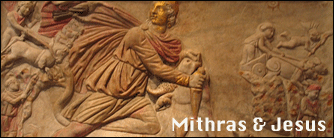
Mithra – Plagiarized Christ

mithras_small

In my long quest to find the origins of Christianity, I believe I now know that the myth was a composite of other man-gods, (of which there were many, though we’ll focus on Mithras today), and created from Old Testament “prophecies” of a coming Messiah, the name Christ coming from Krishna. Emperor Constantine worked 10 years to invent this new religion, his aim was to squash Jewish rebellion while at the same time “taking the Jewishness” out of the religion. He hired Eusebius,  who was himself practically a Flavian and a paid Roman political propagandist (also known as the first thoroughly corrupt historian). As I state later in this post, mythical doesn’t mean lie. Jesus represents all of us, and Gnostics believed we were all potential Christs. Neither does it mean “no Jesus, no God.” Tried as they did to alter texts, there’s still much gnosis scattered through the orthodox scriptures. They did take away the Goddess and reincarnation, but these are recoverable thanks to the discovery of the Nag Hammadi Library, Dead Sea Scrolls, other findings and hard work by dedicated scholars. We can stay in the matrix fiction and serve Roman politics,  or soar as Christ Conscious Divine and Sovereign human Beings, which is our birth right. Granted religious debate can be a futile exercise in mental masturbation. Everyone is right, and bad logic is used to prove it.  Well, everyone does indeed possess their own truth, but not everyone has the facts right. The Jesus Puzzle is a great book to start a search for some fabulous hidden facts, and truthbeknown.com with Acharya S is excellent too. This is the matrix, the system. They keep the truth hidden, it’s what they do best.

God is so far removed from words or description, the only possible way to convey anything about it is the use of myths, allegories, alchemy, parables, kabbalah, and symbolism. Mankind has always been attracted to these man-god stories that are based on Astrotheology. It is the story of ourselves. As above, so below.


Mithra has the following in common with the Jesus character:

Mithra was born on December 25th of the virgin Anahita


The babe was wrapped in swaddling clothes, placed in a manger and attended by shepherds


He was considered a great traveling teacher and master


He had 12 companions or “disciples”


He performed miracles


As the “great bull of the Sun,” Mithra sacrificed himself for world peace


He ascended to heaven


Mithra was viewed as the Good Shepherd, the “Way, the Truth and the Light,” the Redeemer, the Savior, the Messiah


Mithra is omniscient, as he “hears all, sees all, knows all: none can deceive him”


He was identified with both the Lion and the Lamb


His sacred day was Sunday, “the Lord’s Day,” hundreds of years before the appearance of Christ


His religion had a eucharist or “Lord’s Supper”


Mithra “sets his marks on the foreheads of his soldiers”


Mithraism emphasized baptism.


The similarities between Mithraism and christianity have included their chapels, the term “father” for priest, celibacy and, it is notoriously claimed, the December 25th birthdate. Regarding the birth in caves likewise common to pre-Christian gods, and present in the early legends of Jesus, Weigall relates:


”…the cave shown at Bethlehem as the birthplace of Jesus was actually a rock shrine in which the god Tammuz or Adonis was worshipped, as the early Christian father Jerome tells us; and its adoption as the scene of the birth of our Lord was one of those frequent instances of the taking over by Christians of a pagan sacred site.


”The propriety of this appropriation was increased by the fact that the worship of a god in a cave was commonplace in paganism:
Apollo, Cybele, Demeter, Herakles, Hermes, Mithra and Poseidon were all adored in caves.”


Hermes, the Greek Logos, being actually born of Maia in a cave, and Mithra being “rock-born”


As the “rock-born,” Mithras was called “Theos ek Petras,” or the “God from the Rock.”

As Weigall also relates:
Indeed, it may be that the reason of the Vatican hill at Rome being regarded as sacred to Peter, the Christian “Rock,” was that it was already sacred to Mithra, for Mithraic remains have been found there.

Santos Bonacci, Astrotheologist, has claimed ‘the Jew Peter’ is symbolic of ‘Jupiter.’ There is little doubt the characters in the bible represent the planets and stars in the sky. It takes very little OPEN MINDED research to understand the biblical allegories. Saying Jesus was a mythical character is in no way the same as saying there is no God. All main religions are based on Astrotheology, and the myths are  ever pregnant with deeper, amazing and beautiful meanings. The Gnostics considered all of us potential Christs. To give one man this Divine attribute that we all have is cheating ourselves of our Divine Sovereign  birth right. It’s perverted Roman nonsense to control the masses. Religious debate is mental masturbation without a climax. Everyone wants to be right, especially the inventors and churches of the religion of Constantine. That my friend is Ego based bullshit, not spirituality.


“Mithraic remains on Vatican Hill are found underneath the later Christian edifices, which proves the Mithra cult was there first.”

“The worship of Mithra and Anahita, the virgin mother of Mithra, was well-known in the Achaemenian period.”

”For reasons which they doubtless considered sufficient, those who chronicled the life and acts of Jesus found it advisable to metamorphose him into a solar deity. The historical Jesus was forgotten; nearly all the salient incidents recorded in the four Gospels have their correlations in the movements, phases, or functions of the heavenly bodies. Among other allegories borrowed by Christianity from pagan antiquity is the story of the beautiful, blue-eyed Sun God, with His golden hair falling upon His shoulders, robed from head to foot in spotless white and carrying in His arms the Lamb of God, symbolic of the vernal equinox. This handsome youth is a composite of Apollo, Osiris, Orpheus, Mithras, and Bacchus, for He has certain characteristics in common with each of these pagan deities.


”Not only is Jesus often referred to as the Fisher of Men, but as John P. Lundy writes: “The word Fish is an abbreviation of this whole title, Jesus Christ, Son of God, Savior, and Cross; or as St. Augustine expresses it, ‘If you join together the initial letters of the five Greek words, Ἰησοῦς Χριστος Θεου Υιὸσ Σωτήρ, which mean Jesus Christ, Son of God, Savior, they will make ΙΧΘΥΣ, Fish, in which word Christ is mystically understood, because He was able to live in the abyss of this mortality as in the depth of waters, that is, without sin.'” (Monumental Christianity.) Many Christians observe Friday, which is sacred to the Virgin (Venus), upon which day they shall eat fish and not meat. The sign of the fish was one of the earliest symbols of Christianity; and when drawn upon the sand, it informed one Christian that another of the same faith was near. Aquarius is called the Sign of the Water Bearer, or the man with a jug of water on his shoulder mentioned in the New Testament”. ~ Hall, Manly P.

”Christianity and the other Abrahamic religions have become increasingly hostile and destructive. They cling to outdated belief systems, constantly stricken by such pathological concepts as information bias and cognitive dissonance. Civilization is at the brink. However, through more allegorical and psychological lenses, one can still distill the great teachings of their past masters, as Carl Jung, Joseph Campbell, and even the Gnostics illustrated. We throw the dirty bathwater of literalism out and keep the baby that is the inner Savior residing inside each one of us” – Migual Conner.

12250


PONDER THIS:

If you’re a Christian who does believe the Genesis account of original sin, then you also believe that mankind is tainted as a direct result of Adam’s fall from grace. We’re contaminated by sin regardless of our consent or our belief. Enter Jesus. He supposedly was crucified to save us. If our contamination via Adam was passive — it happened regardless of our consent or our belief — then to set the scales of eternal justice in balance again, musn’t Jesus’ redemption also be passive? Shouldn’t his sacrifice cancel out all sin — whether we consent to it or not and whether we believe it or not? To argue otherwise is to say that God has condemned us unconditionally but has made redemption conditional. The implication of the Christian argument is that Adam’s original sin was superior to Jesus’ sacrifice, because Adam’s fall condemned us all whereas Jesus’ redemption can only save some of us. Wasn’t Jesus’ death greater than (or at least equal to) Adam’s mistake? If the crucifixion and resurrection trumped original sin, then the debt for all sin is paid for all time, regardless of our consent, regardless of our belief, regardless of our faith. There is no need to be a Christian to benefit from forgiveness of sin, just as there is no need to be a Christian to inherit Adam’s sinful nature. Either Jesus paid all sin-debt for all time, or he didn’t. So which is it?

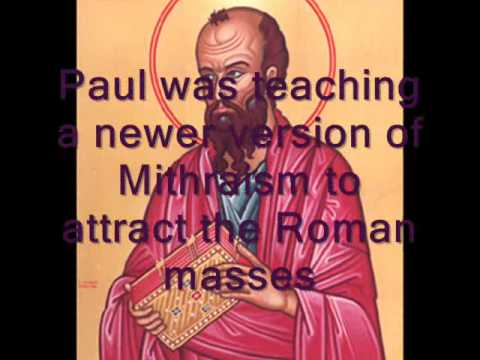
hqdefault

Free Zen

insanity

 
The world turns but I’m not here,
I really want to disappear,
I don’t know why I’m in the dark,
And don’t enjoy this cosmic lark,
When everything is said and done,
I try to laugh but nothing’s fun,
Why drink?
Why smoke?
Why take a pill?
Why try to hide if nothing’s real?
How do I cry yet not shed tears?
How can I face my phony fears?
If you were me what would you do?
Who would you tell your problems to?
‘Cause if I found someone who’d hear,
I know I’d talk then disappear,
It’s not my fault I’m not to blame,
I think I know it’s just a shame.

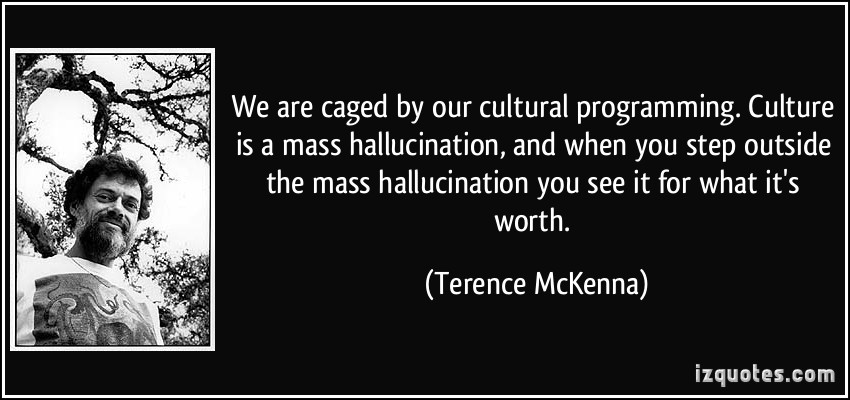
Escaping the Imprisonment of Cultural Programming

quote-we-are-caged-by-our-cultural-programming-culture-is-a-mass-hallucination-and-when-you-step-terence-mckenna-252123

There is one truth that nobody can debate, and that is that we physically die at some point within the near future, relative to the life spans of everything else in the universe. However, it seems that many forget this fact of life and dedicate great amounts of time and energy towards icons, personalities, and ideas that are unconnected to their own day-to-day lives and do not matter in the grand scheme of things.

The intense (and sometimes violent) passion that sports fans experience, as well as the immersion of oneself into the “sleazy” world of celebrities are some ways in which cultures and societies divert our thoughts away from things in life that matter the most. Things which directly affect us and make lasting impressions upon our beings. By creating illusory focus points within reality for the masses to lock their awareness into, culture, and those who have enough power to dictate or influence it, becomes a hindrance to one’s own personal self-growth and self-actualization.

Think about the massive quantities of time that people spend on these things which have no direct connection to their lives…all that time which could have been dedicated towards something a bit more constructive or positive in experiential existence.

Our culture is an artificially-created box in which a seemingly-endless number of things exist that attempt to entice an individual towards giving away massive amounts of his or her conscious lives towards the focusing in on trivialities or things, which have no direct influence on his or her life and self-actualization. Terrence McKenna had mused on the same thought-form, which is that humanity seems to be imprisoned by its cultural programming. This programming is so intense and strong, that it seems to be the most imprisoning factor within our lives. Culture does indeed appear to be a mass hallucination.

There are numerous boundaries that exist within culture that have been erected by groups or individuals within society who (either knowingly or unknowingly) helped hinder any progress being made in peoples’ self-growth, self-actualization and/or self-realization. Things such as sports rivalries, clothes styles and various types of class systems are just a few of the boundaries that had hardly had any useful place in reality because they did not exist prior to us creating them.

Only by complete boundary dissolution can we revert to a more pure form of experiential existence, where the focus of one’s self is on one’s personal growth and growth of others. Boundary dissolution refers to deconstruction and dissolving of boundaries that have been created by humans and which have existed as long as the ego has influenced humanity.

The purpose of boundary dissolution is to do away with these falsehoods that separate humanity rather than uniting it. Societal boundaries and other boundaries based on the self-ish nature of the ego can be said to be the cause of many of society’s ills and problems.

With a good system, come good results, and the results and outcomes of boundary dissolution indeed are many. You can try for yourself to see this as being a reality. Instead of giving into cultural aspects that are unhelpful in shifting your consciousness to a higher level, have the idea of oneness within your mind and immerse yourself in things that unite, rather than divide.

By doing away with the constructs that separate you from others or create any bit of hostility, hatred or animosity between you and someone else and by letting go of the fear that hinders you from taking these actions, you will be freed from the overbearing grip of the ego. When you dissolve the boundaries that divide and separate you from others, you will have the ability to transform your world into one of serenity, tranquility and peace. Oneness will not be just a philosophical or utopian concept but a reality that will be experienced by the totality of the human race.

We must always have hope that this will become a reality because the future is yet to be determined. Possibilities are endless.

About the Author

Paul Lenda is a conscious evolution guide, author of The Creation of a Consciousness Shift, and co-founder of SHIFT>, a social community focused on anchoring in the new paradigm and assisting the positive transformation of humanity. With the drive to be aware of and experience the wider horizon of Reality, Paul has developed an extensive background in the spiritual and transformative elements of life; one that is both knowledge and experienced-based. Visit his website www.shift.is, follow him on Twitter or visit the Shift Facebook community.


Hunger Games no longer fiction: New reality show to strand contestants in wilderness while viewers send aid

WHAT HAVE WE BECOME? This is sick. Is the population creepy enough to make this show a number 1 hit? I wouldn’t be surprised. Sick! (screams – ARGHHHHHH!) Help me my lovely Sophia, Abraxas save us – we’re doomed by the demiurge. Shiva!

The-Hunger-Games-Wallpapers-1

by Mike Adams

The Hunger Games is about to become reality as the Discovery network plans to roll out a show that follows a similar format. In the new reality show called “Survival Live,” contestants will be intentionally stranded in a Pacific Rim jungle without food, adequate clothing or shelter. Their activities will be monitored and recorded via a network of webcams feeding back to TV viewers who can “send aid” in the form of tools, clothing and food.

It’s a format ripped right out of the book (and film) Hunger Games, where an oppressive dictatorial regime forces young adults to fight to the death as a form of entertainment for the masses (and the amusement of the political elite). In the Hunger Games, contestants are dropped into the wilderness with access to deadly weapons they must use to kill each other. As the weakest contestants are killed off, news of their demise is broadcast to enthralled viewers worldwide. Corporations can send aid to contestants in the form of air-dropped supplies, a sort of “paid placement” advertising.

Discovery’s Survival Live follows a similar format, with the weakest contestants being plucked from the show each week (and fortunately not killed outright). Viewers watch the contestants on a network of webcams, and the public can send aid to be delivered to contestants.

In a new twist, “Viewers will be able to track the survivalists’ progress via a 24/7 Web platform that details their biometric data, which will reveal who is physically struggling,” says Hollywood Reporter.(1)

Trending toward survival combat shows

It’s not difficult to see how reality TV is increasingly resembling science fiction. In 1987, a film called The Running Man(2) depicted Arnold Schwarzenegger as a convict placed in a mass-murder game show in which the last man alive wins the show. The show was broadcast for the viewership ratings in a crumbling society where ethics and morals were increasingly abandoned.

Today, as ethics and values are abandoned across American culture, it’s not hard to see reality TV trending toward more “brutal” scenarios where lives are put in extreme danger. Crisis issues threatening the downfall of the nation — such as out-of-control debt spending and the chance of nuclear war with Russia — are increasingly dismissed with distractions involving daytime television and junk celebrity news.

I can certainly see a development where a less conventional broadcast network would work out a deal with private prison corporations to broadcast live “reality prison combat” shows. This could even become a Running Man-style game show where convicts on death row are given the choice to “compete” in a death match and possibly win their freedom.

Many of the fake TV ads depicted in the first Robocop movie (1987) have also come true today. They were considered bizarre at the time, but now ring true in a collapsing culture and society. Even the script choice of Detroit as a crumbling city where cops are overrun with criminals turned out to be prophetic.

Sources for this story include:
(1) http://www.hollywoodreporter.com/live-feed/s…
(2) http://www.imdb.com/title/tt0093894/?ref_=nv…
(3) http://www.imdb.com/title/tt0093870/?ref_=nv…
About the author:

Mike Adams (the “Health Ranger”) is the founder of NaturalNews.com, an independent news source covering personal and planetary wellness from nutrition to sustainable living. He’s written thousands of articles on nutritional therapies, natural remedies and health care reform, attracting a following of millions of readers around the world.Adams was named the second most influential person in alternative media in 2011 and is a recipient of several awards for investigative journalism.
Adams also serves as the executive director of a non-profit organization, the Consumer Wellness Center and spiritual exploration website DivinityNow.com.
Bragging rights
Overcame borderline type-2 diabetes through transformational nutritional therapies

Source:  http://www.naturalnews.com

The War You Don’t See (2010) (Sub español) HD

This is the story about a film which none of us were supposed to see. Not because the film wasn’t up to professional journalistic standards, or that it was of poor quality. It was neither of those. Against the odds and the establishment-owned international media syndicate, award-winning filmmaker and journalist John Pilger reveals one of the most damning indictments of American and British mainstream media. The content of this timeless film is stunning, and shows beyond any reasonable doubt, that our media are not only complicit in advancing conflict around the globe, but are actively engaged in pushing it on behalf of those who seek to profit from international conflagrations.

Documentary from John Pilger, laureate reporter with more than 25 documentaries, 11 books and countless articles published in media such as The Guardian, Daily Mirror, The New York Times, The Los Angeles Times, among others … The War You Don’t See, is a work that follows the influence of the media in shaping public opinion and how governments can manipulate it to benefit their own political agenda …

It’s a full length movie, but it is REALLY informing and well made. PLEASE bookmark to watch when you have the time, you won’t be disappointed!

Words

(The ancients wrote, ”In the beginning was the WORD,”
and that God spoke creation into existence).

Words are energy.

They cast spells.

That’s why they call it SPELLING.

2,000 years ago students knew why it was called spelling.

We have forgotten so much.

Use words wisely.

5 Reasons Why More Americans Don’t Protest Against The System

EGYPT-POLITICS-UNREST
The Declaration of Independence still stands as an important example of how the tolerance of any man can be exceeded by the actions of an over-bearing and intrusive government. Yet, 237 years after the signing of this document, one has to wonder what has happened to the spirit of fearlessness and rugged self-determination that set the American experiment in motion.

As a form of redress of grievances by a people to it’s leadership, protest is as much of a historical part of democracy as voting is. A near-last resort when the populous is bereft of political power, publicly voicing dissent in an organized, peaceful, and constructive manner is a critical and vital sign of life for a society that wishes to be free. Yet, when a ruling elite and political class become too intrusive, parasitic or too dangerous to the population, protest is often a precursor to violence, therefore the outcome of rebellion and protest is never certain and often disastrous. However, the fate of a people without the will to resist the suffrages of an encroaching tyranny is just as foreboding.

While giving credit to the Occupy movement, those who engage in protest at global summits and party conventions, growing national actions like the Tar Sands Blockade and Idle No More, and growing localized activist movements, the nation has no formidable popular mass-movement for dissent. Apparently the American people have little interest in expressing dissatisfaction with the quality of leadership we have in America today.

Why are the American people so permissive of government abuse, intrusion, waste, corruption, cruelty, and stupidity?

Here are 5 reasons reasons why more Americans don’t protest.

1. Protest is Unwelcome in the Matrix

The matrix cannot function properly when people are in the streets speaking truth to power, therefore, protest is an unwanted inconvenience for the economy, the media and the government.

For this, the government is engaged in squashing domestic protest and the media makes every effort to marginalize and ignore popular dissent. Increasingly, protest and civil disobedience are also being viewed as security threats to be met with near-military force. ‘First amendment zones,’ event permits, and laws that equate protest with terrorism all assist in dissuading Americans from participating, while tricks like agent provocateurs, police intimidation, arrest and assault are used to shut protest events down.

The modern American protestor faces regulations, intimidation and physical threats from military crowd control technologies like flash-bang grenades, the LRAD acoustic weapon, pepper sprays, surveillance of all modern types, and even the prospect of microwave pain ray technologies.

All of this already makes protest and dissent seem rather unpalatable to the average American, but, the media further demonizes protest by highlighting and focusing in on any violence that may occur, while downplaying the peaceful moments where intelligent people come together to articulate valid grievances with an out of control system.

The media tarnishes the image of any protest movement to take advantage of the fact that most people are natural followers, not natural leaders, and that most people are watching the protest in relative isolation at home, separated from friends and neighbors. Creating the perception that protests are dangerous events involving un-American, un-patriotic and irresponsible people who are likely to get hurt, helps to prevent popular support on any single issue from reaching critical mass by convincing the average person that it is too complicated and too risky to get involved.

2. Conflict Consciousness – Divided We Fall

Are you a liberal or conservative? Democrat or Republican? Are you on this team, or that team?

It doesn’t matter at all really, but, we’ve been brainwashed into dividing ourselves into an inescapable prison of bi-polarized pigeon-holes.

We blame our neighbors, friends and families for the mismanagement in the world. We blame those different than us, those in different countries, those with different color skin. We trust in authority, those with matching uniform shirts and batman belts, while we distrust and fight amongst each other. We have become culturally programmed to argue, compete, fight, and win for no real purpose. Winning, and being on the winning team has become more valuable than learning, gaining wisdom or uniting.

In this climate, with a social atmosphere so rigidly divided and so pointlessly competitive, any energy for consensus and widespread concerted action is sapped in inter-personal and tribal-like conflict. We are missing great opportunities for compromise, reciprocity, healing and growth. The consciousness of conflict ensures our self-destruction.

3. Higher Priorities… Work and Play

The American Dream of personal freedom and the opportunity for prosperity as a reward for hard work has been transformed in recent decades, influenced by an ongoing sales pitch about what life should be like for the average person. Convenience, ease, comfort, entertainment, excess, escape, work, money, debt. These are the values most available today.

Americans are working harder than ever, if they’re working at all. The economy is in terrible shape and in decline, and the American lifestyle has become so heavily invested in consumerism and debt that the average person is too dependent on continuity of income to risk even a single paycheck. Protesting is at the bottom of the list of things to do on vacation day.

Outside of work, life for most people has become a screen. Television, movies, the internet, work, handheld devices, iPads, Kindle, whatever. A new version of reality has emerged in the delivery of media and the sophistication of entertainment. Our priorities have evolved to put entertainment and escapism at the top of the list, and increasingly less value on honest government, human rights and justice.

Life is also still very good in America for most in the middle class. Food is easy to come by, credit still widely available. Charity, welfare and government assistance in some form are available to most if sought. Drone strikes and IED‘s are not yet to be seen in the homeland.

Commitment to protest and social change requires personal sacrifice. In our social atmosphere of extreme busyness and dumbed-down priorities, participation in social causes is now too risky, too inconvenient, and insufficiently fun. Our natural and historical energies for rebellion and protest are effectively expired in the office, at the bar, or at the movies, or projected onto a character on a screen.

Life has become a hamster wheel of superfluous labor and deliberate distraction.

4. Mindset of Fear, Apathy, and Resignation

Mindset is everything in our quantum-world, and our emotional under current governs how we relate to and participate in the world. Regarding politics, participatory democracy, and protest, the typical American mindset generally falls into one of three categories:

Fear – We are heavily propagandized to approach life from fear-centered consciousness. Life is to be viewed as a threat. America has already become a police state, and is heavily invested in the combination of fear and security. To the average person, the prospect of facing militarized police and possibly being beaten, gassed, dispersed, arrested and perhaps even criminally charged for voicing dissent is certainly an adequate deterrent.

Brutal, violent oppression of dissent works famously well to stop a protest, and for this, people logically fear getting involved.

Apathy – Apathy is another symptom of our cultural decline, and a mindset that keeps most people from participating in civics or protest. Apathy is a nearly-conscious choice to remain ignorant and distracted about something while pursuing the path of least resistance. Apathy seems to be the number one byproduct of our culture of convenience. People don’t care about the quality of our world enough to become involved.

Resignation – Many Americans understand all too well what is happening to constitutional and lawful government and realize that until a much more massive awakening occurs and far more people take interest, there is little to be gained from protesting. This resignation has led many to focus instead on preparing for the worst, including for scenarios like economic collapse and social unrest. Storing food and developing emergency plans is now seen by many as a more productive use of energy than attempting to influence a corrupt political system by participating in politics or protest.

While there are signs that Americans may be slowly waking from the dream-like state that is preventing any unified form of mass protest, it appears that for now, the formerly American qualities of courage, independence and self-determination have been replaced with fear, apathy, and resignation.

5. People Approve of the Status Quo

Americans, by and large, are still happy to enjoy the lifestyle that the status quo delivers, even if it means further forfeitures of privacy and essential human rights. Additionally, the lack of public opposition in mass is also a de facto approval of the political and economic status quo.

‘It is better to beg for forgiveness than to ask for permission,’ goes the saying, and by not objecting to any scandal or violation, no matter how offensive, the majority of America consents to being governed by this domineering logic.

Whether actively or passively, the majority of America supports any and all actions by our government and the corporate status quo.

Conclusion

America is a wonderful place with a vast and breath-taking landscape and a rich culture of ingenuity and creativity. Americans are interesting and generous people. It is difficult to grasp the contradiction between the beautiful and comfortable aspects of American life and the troublesome developments emerging from our leadership. It not easy to understand the gap between the values extolled in still celebrated Declaration of Independence and the lack of public will to hold the government accountable to even the simple Bill of Rights.

Why don’t more Americans protest things like government spying, endless wars, the fraudulent banking system, the growing police state, the destruction of the environment, genetically modified foods, the assault on natural health, or even torture?

While the above 5 reasons are merely one person’s observations and generalizations about American culture, the patterns that emerge here are useful in helping to recognize opportunities for our own personal and collective evolution.

Please add any additional you thoughts you may have in the comments section below.

About the Author

Sigmund Fraud is a survivor of modern psychiatry and a dedicated mental activist. He is a staff writer for WakingTimes.com where he pursues the possibility of a massive shift towards a more psychologically aware future for mankind.

This article is offered under Creative Commons license. It’s okay to republish it anywhere as long as attribution bio is included and all links remain intact.

Thousands of people join a march and demonstration to protest health care reform proposed by US President Barack Obama

Source: Waking Times.

Historic Breaking News: Canada, Vatican & Crown GUILTY of Genocide

Massive Deaths of Aboriginal Children in Canada is officially admitted, as Genocide Verdict and Kevin Annett’s work are finally vindicated –
“Canada, the British Crown and the Vatican stand guilty as charged as disestablished criminal bodies” – International Common Law Court of Justice, Brussels
A Special Report from ITCCS Canada with Commentary by Kevin Annett 
OPPT-IN-GUILTY
Vancouver, Canada:  March 31, 2014
Seventeen years after Rev. Kevin Annett publicly disclosed evidence that over 50,000 children died in Canada’s church-run “Indian residential schools”, Canadian governments have finally confirmed this genocidal mortality rate after releasing hitherto-concealed death records from the schools. (http://westcoastnativenews.com/tens-of-thousands-first-nation-children-died-in-residential-schools/)
Until this week, government and church officials have either denied or stayed silent about Rev. Annett’s documented estimate. But previously “segregated” statistics of the deaths of residential school children made public last Friday by different provinces indicate that “tens of thousands” of these children died in the facilities, which were operated primarily by the Roman Catholic, Anglican and United Church of Canada.
In British Columbia alone, government records indicate that nearly 5,000 children between the ages of four and nineteen died in the residential schools until 1956, although the schools continued in operation until 1996, putting the total death figure even higher. Rev. Annett’s research established that the high death rate of over 40% of the students was the result of deliberately infecting them with tuberculosis and denying the sick treatment. (www.hiddennolonger.com)
“This news officially confirms what our Court established in its lawful verdict of February 25, 2013” stated George Dufort of the International Common Law Court of Justice in Brussels today.
“Canada and its churches, the British Crown and the Vatican stand guilty as charged as disestablished criminal bodies and can no longer have any lawful or legitimate constitutional authority if the rule of law is to be followed”.
This week’s official admission of massive deaths in the Indian residential schools comes on the heels of shocking new evidence showing that a Vatican and Church of England child sacrifice cult known as the Ninth Circle operated at the same schools for over a century, including at the Mohawk residential school in Brantford, Ontario. (www.itccs.org, March 29, 2014)
Kevin Annett was reached at his home in Nanaimo, British Columbia today and provided the enclosed you tube commentary on the remarkable news.
“I always knew their lies would fall apart, and persistence would pay off” remarked Kevin.
“But I’m thinking now of all my friends who died after struggling to see this day come about, like Bingo Dawson, Billie Combes, Ricky Lavallee and Harry Wilson – some of the eyewitnesses to the Canadian Holocaust who went public at great personal risk. This is their victory, as it belongs to all the missing children. But it will only mean something if Canadians act on this final proof of Genocide by church and state to enforce the verdict and arrest warrants of the Common Law court.
“Prime Minister Stephen Harper, Queen Elizabeth, Joseph Ratzinger and twenty seven other officials belong behind bars. And more than that, it’s now time to establish a constitutional Republic in Canada that is free and independent of the British Crown and the legacies of Vatican-sponsored Genocide”.
Details of the plans to act upon this recent acknowledgement are discussed in Kevin Annett’s attached you tube commentary.
Issued by ITCCS Canada and ITCCS Central, Brussels-based
 itccs.org


Static Quo

GNP.HOMELESS1.092609.RR


Static Quo

Lizards, birds and jungle snakes,
In hanging gardens nature makes,
Below’s a giant waterfall,
That never makes a sound at all.

Vultures circling like drones spying,
Flying, waiting for the dying,
Casting shadows on denial,
And a hungry crocodile.

The lion and the elephant,
Are dancing in a nervous fit,
This jungle of the paranoid,
Is hiding what it can’t avoid.

I stand here naked on the street,
Where the jungle and the city meet,
The homeless in their cardboard tents,
The rich surrounded by a fence.

The paranoia’s everywhere,
The sickness of it fills the air,
Perhaps these are just pointless views,
Distorted by the evening news?

Our love can make them go away,
The problems that are here today,
‘Cause what you give is what you get,
I haven’t lost all hope just yet.

Holistic Cancer Research: Marijuana, THC and Hemp Oil

Flickr-oil-SB-Archer

One of the more promising holistic cancer treatments involves hemp oil, as promoted by Rick Simpson.

According to Simpson, there are three different ways to use hemp oil: you can ingest it, vaporize it or use it as a topical oil. As evidenced by eyewitness testimonials, Hemp Oil not only cures cancer but also helps to alleviate other medical issues such as back pain, migraine headaches, ovary cysts, arthritis, upset stomach, diarrhea, depression, anxiety and panic

“I would like someone to show me what it can’t heal.” ~ Rick Simpson

Simpson believes Hemp Oil can be used on a plethora of medical conditions such as cancer, diabetes, infections, glaucoma, arthritis, chronic pain, burns, ulcers, warts, moles, migraine headaches, skin conditions, asthma, insomnia, anxiety and depression and any condition involving mutating cells.  Additionally, Simpson stated Hemp Oil helps to regulate your weight, heals scar tissue and rejuvenates vital organs.  Simpson added, “In fact, I would like someone to show me what it can’t heal.”

In conjunction with other eyewitness testimony, many people successfully used hemp oil to specifically treat skin cancer by applying the oil directly to the affected mole.

Terminal cancer survivor James Albert LeBlanc stated, “The chemo and radiation just kills everything inside of you, it doesn’t give you a chance to live.”  Because of hemp oil, according to LeBlanc, “That’s why I am sitting here today telling you that hemp oil does work!”

After a serious head injury in 1997, Rick Simpson sought relief from his medical condition through the use of medicinal hemp oil. When Rick discovered that the hemp oil (with its high concentration of T.H.C.) cured cancer and other illnesses, he tried to share it with as many people as he could, free of charge, curing and controlling literally hundreds of people’s illnesses… but when the story went public, the long arm of the law snatched the medicine,  leaving potentially thousands of people without cancer treatments and leaving Rick with unconstitutional charges of possessing and trafficking marijuana.

A new video on marijuana corroborates Simpson’s claims:

Even a Harvard study has proven that THC can cure cancer:

Additional medical research:


Watch ‘Clearing the Smoke’: The Benefits, Limits of Medical… on PBS. See more from PBS NewsHour.

Throughout man’s history, hemp has always been known as the most medicinal plant in the world. In the 17th and 18th centuries, you could be jailed for refusing to grow marijuana! For more interesting marijuana trivia, watch this:

Hemp oil can cure cancer, but Big Pharma doesn’t want you to know about this because there’s no repeat customers when any cure is found. Big Pharma learned this lesson when Polio was cured. Rick Simpson believes that hemp oil can cure ANYTHING. Because marijuana is a natural substance, Big Pharma cannot place a patent on it like they can with products like Zoloft or Adderall. Is it any wonder why Big Pharma doesn’t want to see hemp oil used in any kind of treatment?

While HolisticCancerResearch.com does not advocate the use of any illicit substances, we do however, promote holistic methods for healing. The following video is intended for research purposes only.

As Dr. Leonard Coldwell has stated, “As nature creates a problem, nature creates a solution.’ The use of Hemp Oil should be researched by a third party organization who has no affiliation to Big Pharma, the medical industry or Rick Simpson in order to gain empirical data of the efficacy of Hemp Oil in holistic cancer treatment.

Testing Hemp Oil would be ideal for those who have been diagnosed with terminal cancer. What do they have to lose?

Once cancer has reached a certain point, it usualy is terminal, regardless of what form of treatment is being used. The late Steve Jobs opted for alternative medicine at the end of his life, to no avail.

The timing of the diagnosis and how far along the cancer has progressed appears to be the most significant factors in determinging what the potential outcome might be. If the cancer is caught early, then most holistic professionals would likely agree to use alternative medicine as a form of treatment. If the cancer has gone too far, then most traditional and non-traditional methods will not work.

Please educate yourself in as many ways as possible. Bookmark HolisticCancerResearch, as this website is continually updated with holistic and alternative cancer research.

Please note: Any information presented in this article is for educational research ONLY. This particular article and author is not making any recommendations and is not giving any personal medical advice in the following material.

Copyright Information: Copyright HolisticCancerResearch.com and Gregg Prescott, M.S.. This content may be freely reproduced in full or in part in digital form with full attribution to the author and a link to HolisticCancerResearch.com. Please contact us for permission to reproduce this content in other media formats.

**This article originally appeared on HolisticCancerResearch.com.**

10 Painfully Obvious Truths Everyone Forgets Too Soon

The truth does not cease to exist when it is ignored.
You know how you can hear something a hundred times in a hundred different ways before it finally gets through to you? The ten truths listed below fall firmly into that category – life lessons that many of us likely learned years ago, and have been reminded of ever since, but for whatever reason, haven’t fully grasped.
10-painfully-obvious-truths
This, my friends, is my attempt at helping all of us, myself included, “get it” and “remember it” once and for all…

1. The average human life is relatively short. 

truthsWe know deep down that life is short, and that death will happen to all of us eventually, and yet we are infinitely surprised when it happens to someone we know. It’s like walking up a flight of stairs with a distracted mind, and misjudging the final step. You expected there to be one more stair than there is, and so you find yourself off balance for a moment, before your mind shifts back to the present moment and how the world really is.
LIVE your life TODAY! Don’t ignore death, but don’t be afraid of it either. Be afraid of a life you never lived because you were too afraid to take action. Death is not the greatest loss in life. The greatest loss is what dies inside you while you’re still alive. Be bold. Be courageous. Be scared to death, and then take the next step anyway.

2. You will only ever live the life you create for yourself. 

Your life is yours alone. Others can try to persuade you, but they can’t decide for you. They can walk with you, but not in your shoes. So make sure the path you decide to walk aligns with your own intuition and desires, and don’t be scared to switch paths or pave a new one when it makes sense.
Remember, it’s always better to be at the bottom of the ladder you want to climb than the top of the one you don’t. Be productive and patient. And realize that patience is not about waiting, but the ability to keep a good attitude while working hard for what you believe in. This is your life, and it is made up entirely of your choices. May your actions speak louder than your words. May your life preach louder than your lips. May your success be your noise in the end.
And if life only teaches you one thing, let it be that taking a passionate leap is always worth it. Even if you have no idea where you’re going to land, be brave enough to step up to the edge of the unknown, and listen to your heart. (Angel and I discuss this in more detail in the “Passion and Growth” chapter of 1,000 Little Things Happy, Successful People Do Differently.)

3. Being busy does NOT mean being productive. 

Busyness isn’t a virtue, nor is it something to respect. Though we all have seasons of crazy schedules, very few of us have a legitimate need to be busy ALL the time. We simply don’t know how to live within our means, prioritize properly, and say no when we should.
Being busy rarely equates to productivity these days. Just take a quick look around. Busy people outnumber productive people by a wide margin. Busy people are rushing all over the place, and running late half of the time. They’re heading to work, conferences, meetings, social engagements, etc. They barely have enough free time for family get-togethers and they rarely get enough sleep. Yet, emails are shooting out of their smart phones like machine gun bullets, and their day planners are jammed to the brim with obligations. Their busy schedule gives them an elevated sense of importance. But it’s all an illusion. They’re like hamsters running on a wheel.
Though being busy can make us feel more alive than anything else for a moment, the sensation is not sustainable long term. We will inevitably, whether tomorrow or on our deathbed, come to wish that we spent less time in the buzz of busyness and more time actually living a purposeful life.

4. Some kind of failure always occurs before success.

Fail-Fail-Fail-Fail-SucceedMost mistakes are unavoidable. Learn to forgive yourself. It’s not a problem to make them. It’s only a problem if you never learn from them.
If you’re too afraid of failure, you can’t possibly do what needs to be done to be successful. The solution to this problem is making friends with failure. You want to know the difference between a master and a beginner? The master has failed more times than the beginner has even tried. Behind every great piece of art is a thousand failed attempts to make it, but these attempts are simply never shown to us.
Bottom line: Just because it’s not happening now, doesn’t mean it never will. Sometimes things have to go very wrong before they can be right. (Read The Success Principles.)

5. Thinking and doing are two very different things. 

Success never comes to look for you while you wait around thinking about it.
You are what you do, not what you say you’ll do. Knowledge is basically useless without action. Good things don’t come to those who wait; they come to those who work on meaningful goals. Ask yourself what’s really important and then have the courage to build your life around your answer.
And remember, if you wait until you feel 100% ready to begin, you’ll likely be waiting the rest of your life.

6. You don’t have to wait for an apology to forgive. 

Life gets much easier when you learn to accept all the apologies you never got. The key is to be thankful for every experience – positive or negative. It’s taking a step back and saying, “Thank you for the lesson.” It’s realizing that grudges from the past are a perfect waste of today’s happiness, and that holding one is like letting unwanted company live rent free in your head.
Forgiveness is a promise – one you want to keep. When you forgive someone you are making a promise not to hold the unchangeable past against your present self. It has nothing to do with freeing a criminal of his or her crime, and everything to do with freeing yourself of the burden of being an eternal victim.

7. Some people are simply the wrong match for you. 

You will only ever be as great as the people you surround yourself with, so be brave enough to let go of those who keep bringing you down. You shouldn’t force connections with people who constantly make you feel less than amazing.
If someone makes you feel uncomfortable and insecure every time you’re with them, for whatever reason, they’re probably not close friend material. If they make you feel like you can’t be yourself, or if they make you “less than” in any way, don’t pursue a connection with them. If you feel emotionally drained after hanging out with them or get a small hit of anxiety when you are reminded of them, listen to your intuition. There are so many “right people” for you, who energize you and inspire you to be your best self. It makes no sense to force it with people who are the wrong match for you.

8. It’s not other people’s job to love you; it’s yours. 

love-yourself-1It’s important to be nice to others, but it’s even more important to be nice to yourself. You really have to love yourself to get anything done in this world. So make sure you don’t start seeing yourself through the eyes of those who don’t value you. Know your worth, even if they don’t.
Today, let someone love you just the way you are – as flawed as you might be, as unattractive as you sometimes feel, and as incomplete as you think you are. Yes, let someone love you despite all of this, and let that someone be YOU. (Read Love Yourself Like Your Life Depends On It.)

9. What you own is not who YOU are. 

Stuff really is just stuff, and it has absolutely no bearing on who you are as a person. Most of us can make do with much less than we think we need. That’s a valuable reminder, especially in a hugely consumer-driven culture that focuses more on material things than meaningful connections and experiences.
You have to create your own culture. Don’t watch TV, don’t read every fashion magazine, and don’t consume too much of the evening news. Find the strength to fill your time with meaningful experiences. The space and time you are occupying at this very moment is LIFE, and if you’re worrying about Kim Kardashian or Lebron James or some other famous face, then you are disempowered. You’re giving your life away to marketing and media trickery, which is created by big companies to ultimately motivate you to want to dress a certain way, look a certain way, and be a certain way. This is tragic, this kind of thinking. It’s all just Hollywood brainwashing. What is real is YOU and your friends and your family, your loves, your highs, your hopes, your plans, your fears, etc.
Too often we’re told that we’re not important, we’re just peripheral to what is. “Get a degree, get a job, get a car, get a house, and keep on getting.” And it’s sad, because someday you’ll wake up and realize you’ve been tricked. And all you’ll want then is to reclaim your mind by getting it out of the hands of the brainwashers who want to turn you into a drone that buys everything that isn’t needed to impress everyone that isn’t important.

10. Everything changes, every second. 

Embrace change and realize it happens for a reason. It won’t always be obvious at first, but in the end it will be worth it.
What you have today may become what you had by tomorrow. You never know. Things change, often spontaneously. People and circumstances come and go. Life doesn’t stop for anybody. It moves rapidly and rushes from calm to chaos in a matter of seconds, and happens like this to people every day. It’s likely happening to someone nearby right now.
Sometimes the shortest split second in time changes the direction of our lives. A seemingly innocuous decision rattles our whole world like a meteorite striking Earth. Entire lives have been swiveled and flipped upside down, for better or worse, on the strength of an unpredictable event. And these events are always happening.
However good or bad a situation is now, it will change. That’s the one thing you can count on. So when life is good, enjoy it. Don’t go looking for something better every second. Happiness never comes to those who don’t appreciate what they have while they have it.
Your turn…
What else would you add to this list? What important life lessons do you often forget? Leave a comment below and share your thoughts.
Authors:  Marc and Angel Hack Life


Source: RiseEarth.

Now and Zen

Spirituality-Reality-Check

NOW AND ZEN

Sneaking up without warning,
Another –
Tomorrow morning,
Yesterday is history now,
Let it go,
(But I don’t know how).

Surprises stored up for today,
Arrive on time –
Without delay,
Like in the middle of a dream,
Treating me,
To more ice cream.

Look around and see the tragic;
Or look inside –
And see the magic,
Man this is really quite a show,
That all began,
So long ago.

Everyone plays their part so well,
They’re just acting,
But I can’t tell,
Suddenly and without fanfare,
Day is done,
And I don’t care.


I Am …

1239735_10151880948556286_1660799160_n

The primary Delusion of humans is our inability to see the way things really are. Because of a strong willful blindness we see things in a distorted way. We can only ‘know’ what we are told, and hardly any of that is true. We are easily exploited and victimized, and behave collectively much like a herd of stupid cattle (no offense to cattle intended). We are enslaved to a matrix of lies and are as if already dead. Why are we like this?  Did we decide to make our home in this lower dimension/vibration? What is our true nature?

The world is in reality one seamless dynamic unity,  a single living organism that is constantly changing and pulsating. Our minds try to chop it up into separate static bits and pieces, which we then try mentally and physically to manipulate.

One of the minds most clever creations is the idea of the person — and closest to home, a very special person each of us calls “I.” A separate enduring ego or self. In that instant this seamless dynamic universe is cut in two. There is now an I and there is all the rest. That means conflict because this “I” can’t control the vastness against which it is set, though it will try, for that is the nature of the “I.”

This isn’t to deny that the notion of an “I” works in the everyday world, in fact we need a solid stable ego to function in society. But “I” is not real in an Ultimate sense. It’s a name, a fictional creation that bears no resemblance to what is really the case. Because of this all kinds of problems arise.

Once our minds have constructed the notion of “I” it becomes our central reference point. We attach to it and identify with it totally! We attempt to do what appears to be in it’s best interests and we defend it against imagined threats. We look for ego affirmation at every chance to confirm we exist and are valued.

The preoccupations arising from all this absorbs us completely, to the point of obsession. This is a narrow and constricted way of Being. Though we can’t see it when we are caught up in a fit of ego, there is something in us that is larger and deeper: a whole other way of Being. This must become the point of focus. Like Astral Gardeners we need to care for the bits and pieces we mentally created and remember all is of One Self. And Love and nurture, with empathy and compassion, all the “other I’s” that seem ‘out there.’

Everything Is A Lie: The Deliberate Intent To Deceive People Is At An All Time High

You might think that it’s not important to question EVERYTHING. Where would it end, right? But, as human beings, our very existence depends on the accuracy of the information we rely upon. So, ask yourself – would you rather live AND die based on lies or on truth?

all-you-ever-kneww

From pollution to politics, the era of deception and duplicity has reached new heights and hijacked almost every form of media in the world. In the last frontiers for truth such as the internet, disinformation operations are in full swing to discredit and destroy any semblance of authentic and factual information available to the public.

How many more lies will people around the world accept as truth? Some say a global awakening is taking place, but at what cost? Will it take the destruction of most of the earth and its resources before people are enlightened?

The escalating media and political reports are so far fetched, cunning, and so beyond reality, it’s as if each is trying to top the other with one sinister plot after the next. To demonstrate the outright lies by national governments and the media, let’s take three examples from the last year alone, including the H1N1 scandal, airport body scanners and the BP oil disaster.

The H1N1 Scandal

Last year, the H1N1 scandal reached its pinnacle in the fall of 2009 when the world united on the internet with a consensus and practical understanding of the World Health Organization’s orchestratration to deceive the masses. From radio, internet, television, newspapers, magazines, outdoor posters, signage and promotions, you could not escape the flu hype campaigns so diligently pursued by all the malicious agendas at play who only wanted one thing – to promote a dangerous H1N1 vaccine. After hundreds of reports exposed the criminal activity by all levels of government, we left the same people in power to do it all over again.

According to preliminary reports, another round of pandemic vaccine campaigns are scheduled for the 2010/2011 season and they’re already underway. However, there appears to be a recombination that has changed the H1N1 lab created virus into a more lethal form and it is not a hoax, but it may be yet another CDC lab experiment.

The CDC has recently issued a Health Advisory in connection with two summer outbreaks of H3N2 in Iowa. Other reports from Russia and India indicate that a real epidemic may be upon us if the virus steadily recombines and acquires new genetics. Even though a new strain may have accidentally evolved in eggs, reassortment of H1N1-H5N1 has been a legitimate concern for years. The WHO first suggested the reassortment of H1N1-H5N1 in 2004.

If this is really the case, how will the public react after all the lies from health agencies who have sworn to protect us? Will they hype another vaccine and if so, will the public even respond?

Body Scanners

They’ve been approved all over the world and marketed as the next greatest airport scanning technology. The U.S., U.K., Russia, Australia, Europe and Canada have all installed airport body scanners which have potentially devastating health effects.

Many of these scanners are reportedly using terahertz (THz) waves, the radiation that fills the slot in the electromagnetic spectrum between microwaves and infrared. Evidence suggests that although the forces generated are tiny, resonant effects allow THz waves to unzip double-stranded DNA, creating bubbles in the double strand that could significantly interfere with processes such as gene expression and DNA replication.

As the path toward rolling out wider use of whole-body scanners in U.S. airports ran through the White House, Obama expedited their deployment because the Department of Homeland Security (DHS) and Transportation Security Administration (TSA) didn’t need legislation from Congress to start using the devices at any of the 560 U.S. airports.

The White House ignored all the scientific evidence presented which suggested negative health effects. Politicians and regulatory agencies then covered up the bad publicity on naked body scanners and focused on the presumed benefits under the guise of public safety.

Privacy commisioners and airport authorities have also insisted that there were no risks of images being stored or personal details being revealed to security screeners. Now there’s new evidence to show that the scanners can do just that.

According to a CNET report, another federal agency, the U.S. Marshall’s service, admitted that it had actually stored over 30,000 images recorded by a full-body scanner used at a Florida courthouse.

A watchdog group called the Electronic Privacy Information Center (EPIC) obtained over 100 of the images and states on its web site that, “The images, which are routinely captured by the federal agency, prove that body scanning devices store and record images of individuals stripped naked.” The group has filed a lawsuit to suspend the deployment of body scanners at airports.

EPIC also discovered that the TSA actually specified to manufacturers that the machines have the ability to send and store images. The TSA says that these functions are only for testing and training and insists on its web site that the airport body scanners are delivered to airports with storage and recording functions disabled.

Again, the upper levels of the echelon are caught lying and deceiving, yet they are still left to their own devices to further manipulate and continue misrepresenting facts to the gullible public.

BP Oil Disaster

When news unfolded about the April 20, 2010 BP oil disaster, it went from bad to worse. Instead of immediately mobilizing for action in the face of a massive public health threat, the response was to cover-up, deny and respond with ignorance. After all the public will always believe them, or so they thought.

The Obama administration, Interior Secretary Ken Salazar, U.S. Coast Guard commandant admiral Thad Allen, energy and climate-change policy adviser Carol Browner, BP and all their contituents conspired to deliberately mislead the public from the inception of the disaster to present day. What’s worse is they all agreed to further disseminate toxins in the Gulf by spraying 1.8 to 2 million gallons of the neurotoxin Corexit which was exposed by over a hundred scientists, toxicologists and other experts who have unequivocally classified the irresponsible aerial spraying of the chemical dispersant as a large-scale, uncontrolled non-consensual human and environmental experiment is being conducted in the Gulf region.

The media was grossly censoring the extent of the devastation in the Gulf. The poisons–oil and corexit are destined to spread globally, but honest reporting was and still is restricted, and many independent investigators have been arrested. Read 30 Facts Evidencing that The Gulf Oil Crisis Was Planned.

On June 12, 2010, The Institute of Atmospheric Sciences and Climate (ISAC) released “Risk of Global Climate Change By BP Oil Spill“, a document detailing how the BP spill may cause irreparable damage to the Gulf Stream global climate thermoregulation activity. Read Gulf Loop Current Destroyed: May Lead To Shut Down of Atlantic Thermoregulation, Rapid Cooling.

According to Dr. Gianluigi Zangari, an Italian theoretical physicist, and major complex and chaotic systems analyst at the Frascati National Laboratories in Italy, the Loop Current in the Gulf of Mexico has stalled as a consequence of the BP oil spill disaster. Zangari notes that the effects of this stall have also begun to spread to the Gulf Stream. This is because the Loop Current is a crucial element of the Gulf Stream itself and why it is commonly referred to as the “main engine” of the Stream.

The concern now, is whether or not natural processes can re-establish the stalled Loop Current. If not, we could begin to see global crop failures as early as 2011.

Zangari’s assessment is based on daily monitoring of real-time data oceanographic satellite public data feeds called “Real-Time Mesoscale Altimetry” from the Jason, Topex/Poseidon, Geosat, Follow-On, ERS-2 and Envisat satellites.

These satellite feeds are captured and made publicly available by NASA, NOAA and by the Colorado Center for Astrodynamics Research (CCAR) at the University of Colorado at Boulder.

The CCAR is now being accused of scientific fraud and tampering of data directly associated with the events surrounding the Loop Current phenomenon and its current anomalies. Various reporters have spear-headed the charge including radio personality Dr. Bill Deagle who has featured Dr. Zangari on his radio show The Nutrimedical Report where he detailed the events leading up to the destruction of the Loop Current in the Gulf.

Dr. Zangari has stated that he will no longer use CCAR data due to its unreliability.

Organized and Professional Disinformation Operations

Well-funded and highly-organized disinformation operations are in full-swing throughout the internet. From forums to comment boards and even professional websites that have only one purpose: Defame, distract, and destroy the truth.

However organized, the tactics are very predictable in a world filled with lies and half-truths. This, sadly, includes every day news media, one of the worst offenders with respect to being a source of disinformation.

Disinformation campaigns are launched against those seeking to uncover and expose the truth and/or the conspiracy. The H1N1 scandal was a prime example of how hundreds of operations can be launched to sway opinions on the facts. For every fact-based article on the realities of the H1N1 vaccine, there were both very primitive and sophisticated counters on message boards, comment forums and hundreds of alternative and mainstream websites.

Stephen Barrett’s Quackwatch.com and supporters such as skeptic.org.uk and skepticblog.com are examples of websites which promote both synthetic and organic disinformation on almost any topic that does not concur with mainstream thought.

There are specific tactics which disinfo artists tend to apply, as H. Michael Sweeney has brilliantly detailed. Also included with this material are eight common traits of the disinfo artist which may also prove useful in identifying players and motives. The more a particular party fits the traits and is guilty of following the rules, the more likely they are a professional disinfo artist with a vested motive. People can be bought, threatened, or blackmailed into providing disinformation, so even “good guys” can be suspect in many cases.

A rational person participating as one interested in the truth will evaluate that chain of evidence and conclude either that the links are solid and conclusive, that one or more links are weak and need further development before conclusion can be arrived at, or that one or more links can be broken, usually invalidating (but not necessarily so, if parallel links already exist or can be found, or if a particular link was merely supportive, but not in itself key) the argument. The game is played by raising issues which either strengthen or weaken (preferably to the point of breaking) these links. It is the job of a disinfo artist to interfere with these evaluation… to at least make people think the links are weak or broken when, in truth, they are not… or to propose alternative solutions leading away from the truth. Often, by simply impeding and slowing down the process through disinformation tactics, a level of victory is assured because apathy increases with time and rhetoric.

It would seem true in almost every instance, that if one cannot break the chain of evidence for a given solution, revelation of truth has won out. If the chain is broken either a new link must be forged, or a whole new chain developed, or the solution is invalid an a new one must be found… but truth still wins out. There is no shame in being the creator or supporter of a failed solution, chain, or link, if done with honesty in search of the truth. This is the rational approach. While it is understandable that a person can become emotionally involved with a particular side of a given issue, it is really unimportant who wins, as long as truth wins. But the disinfo artist will seek to emotionalize and chastise any failure (real or false claims thereof), and will seek by means of intimidation to prevent discussion in general.

It is the disinfo artist and those who may pull their strings (those who stand to suffer should the crime be solved) MUST seek to prevent rational and complete examination of any chain of evidence which would hang them. Since fact and truth seldom fall on their own, they must be overcome with lies and deceit. Those who are professional in the art of lies and deceit, such as the intelligence community and the professional criminal (often the same people or at least working together), tend to apply fairly well defined and observable tools in this process. However, the public at large is not well armed against such weapons, and is often easily led astray by these time-proven tactics. Remarkably, not even media and law enforcement have NOT BEEN TRAINED to deal with these issues. For the most part, only the players themselves understand the rules of the game.

Twenty-Five Rules of Disinformation

1. Hear no evil, see no evil, speak no evil.

Regardless of what you know, don’t discuss it — especially if you are a public figure, news anchor, etc. If it’s not reported, it didn’t happen, and you never have to deal with the issues.

2. Become incredulous and indignant.

Avoid discussing key issues and instead focus on side issues which can be used to show the topic as being critical of some otherwise sacrosanct group or theme. This is also known as the ‘How dare you!’ gambit.

3. Create rumor mongers.

Avoid discussing issues by describing all charges, regardless of venue or evidence, as mere rumors and wild accusations. Other derogatory terms mutually exclusive of truth may work as well. This method works especially well with a silent press because the only way the public can learn of the facts are through such ‘arguable rumors’. If you can associate the material with the Internet, use this fact to certify it a ‘wild rumor’ from a ‘bunch of kids on the Internet’ which can have no basis in fact.

4. Use a straw man.

Find or create a seeming element of your opponent’s argument which you can easily knock down to make yourself look good and the opponent to look bad. Either make up an issue you may safely imply exists based on your interpretation of the opponent/opponent arguments/situation, or select the weakest aspect of the weakest charges. Amplify their significance and destroy them in a way which appears to debunk all the charges, real and fabricated alike, while actually avoiding discussion of the real issues.

5. Sidetrack opponents with name calling and ridicule.

This is also known as the primary ‘attack the messenger’ ploy, though other methods qualify as variants of that approach. Associate opponents with unpopular titles such as ‘kooks’, ‘right-wing’, ‘liberal’, ‘left-wing’, ‘terrorists’, ‘conspiracy buffs’, ‘radicals’, ‘militia’, ‘racists’, ‘religious fanatics’, ‘sexual deviates’, and so forth. This makes others shrink from support out of fear of gaining the same label, and you avoid dealing with issues.

6. Hit and Run.

In any public forum, make a brief attack of your opponent or the opponent position and then scamper off before an answer can be fielded, or simply ignore any answer. This works extremely well in Internet and letters-to-the-editor environments where a steady stream of new identities can be called upon without having to explain critical reasoning — simply make an accusation or other attack, never discussing issues, and never answering any subsequent response, for that would dignify the opponent’s viewpoint.

7. Question motives.

Twist or amplify any fact which could be taken to imply that the opponent operates out of a hidden personal agenda or other bias. This avoids discussing issues and forces the accuser on the defensive.

8. Invoke authority.

Claim for yourself or associate yourself with authority and present your argument with enough ‘jargon’ and ‘minutia’ to illustrate you are ‘one who knows’, and simply say it isn’t so without discussing issues or demonstrating concretely why or citing sources.

9. Play Dumb.

No matter what evidence or logical argument is offered, avoid discussing issues except with denials they have any credibility, make any sense, provide any proof, contain or make a point, have logic, or support a conclusion. Mix well for maximum effect.

10. Associate opponent charges with old news.

A derivative of the straw man — usually, in any large-scale matter of high visibility, someone will make charges early on which can be or were already easily dealt with – a kind of investment for the future should the matter not be so easily contained.) Where it can be foreseen, have your own side raise a straw man issue and have it dealt with early on as part of the initial contingency plans. Subsequent charges, regardless of validity or new ground uncovered, can usually then be associated with the original charge and dismissed as simply being a rehash without need to address current issues — so much the better where the opponent is or was involved with the original source.

11. Establish and rely upon fall-back positions.

Using a minor matter or element of the facts, take the ‘high road’ and ‘confess’ with candor that some innocent mistake, in hindsight, was made — but that opponents have seized on the opportunity to blow it all out of proportion and imply greater criminalities which, ‘just aren’t so.’ Others can reinforce this on your behalf, later, and even publicly ‘call for an end to the nonsense’ because you have already ‘done the right thing.’ Done properly, this can garner sympathy and respect for ‘coming clean’ and ‘owning up’ to your mistakes without addressing more serious issues.

12. Enigmas have no solution.

Drawing upon the overall umbrella of events surrounding the crime and the multitude of players and events, paint the entire affair as too complex to solve. This causes those otherwise following the matter to begin to lose interest more quickly without having to address the actual issues.

13. Alice in Wonderland Logic.

Avoid discussion of the issues by reasoning backwards or with an apparent deductive logic which forbears any actual material fact.

14. Demand complete solutions.

Avoid the issues by requiring opponents to solve the crime at hand completely, a ploy which works best with issues qualifying for rule 10.

15. Fit the facts to alternate conclusions.

This requires creative thinking unless the crime was planned with contingency conclusions in place.

16. Vanish evidence and witnesses.

If it does not exist, it is not fact, and you won’t have to address the issue.

17. Change the subject.

Usually in connection with one of the other ploys listed here, find a way to side-track the discussion with abrasive or controversial comments in hopes of turning attention to a new, more manageable topic. This works especially well with companions who can ‘argue’ with you over the new topic and polarize the discussion arena in order to avoid discussing more key issues.

18. Emotionalize, Antagonize, and Goad Opponents.

If you can’t do anything else, chide and taunt your opponents and draw them into emotional responses which will tend to make them look foolish and overly motivated, and generally render their material somewhat less coherent. Not only will you avoid discussing the issues in the first instance, but even if their emotional response addresses the issue, you can further avoid the issues by then focusing on how ‘sensitive they are to criticism.’

19. Ignore facts presented, demand impossible proofs.

This is perhaps a variant of the ‘play dumb’ rule. Regardless of what material may be presented by an opponent in public forums, claim the material irrelevant and demand proof that is impossible for the opponent to come by (it may exist, but not be at his disposal, or it may be something which is known to be safely destroyed or withheld, such as a murder weapon.) In order to completely avoid discussing issues, it may be required that you to categorically deny and be critical of media or books as valid sources, deny that witnesses are acceptable, or even deny that statements made by government or other authorities have any meaning or relevance.

20. False evidence.

Whenever possible, introduce new facts or clues designed and manufactured to conflict with opponent presentations — as useful tools to neutralize sensitive issues or impede resolution. This works best when the crime was designed with contingencies for the purpose, and the facts cannot be easily separated from the fabrications.

21. Call a Grand Jury, Special Prosecutor, or other empowered investigative body.

Subvert the (process) to your benefit and effectively neutralize all sensitive issues without open discussion. Once convened, the evidence and testimony are required to be secret when properly handled. For instance, if you own the prosecuting attorney, it can insure a Grand Jury hears no useful evidence and that the evidence is sealed an unavailable to subsequent investigators. Once a favorable verdict is achieved, the matter can be considered officially closed. Usually, this technique is applied to find the guilty innocent, but it can also be used to obtain charges when seeking to frame a victim.

22. Manufacture a new truth.

Create your own expert(s), group(s), author(s), leader(s) or influence existing ones willing to forge new ground via scientific, investigative, or social research or testimony which concludes favorably. In this way, if you must actually address issues, you can do so authoritatively.

23. Create bigger distractions.

If the above does not seem to be working to distract from sensitive issues, or to prevent unwanted media coverage of unstoppable events such as trials, create bigger news stories (or treat them as such) to distract the multitudes.

24. Silence critics.

If the above methods do not prevail, consider removing opponents from circulation by some definitive solution so that the need to address issues is removed entirely. This can be by their death, arrest and detention, blackmail or destruction of their character by release of blackmail information, or merely by destroying them financially, emotionally, or severely damaging their health.

25. Vanish.

If you are a key holder of secrets or otherwise overly illuminated and you think the heat is getting too hot, to avoid the issues, vacate the kitchen.

Eight Traits of the Disinformationalist

1) Avoidance

They never actually discuss issues head-on or provide constructive input, generally avoiding citation of references or credentials. Rather, they merely imply this, that, and the other. Virtually everything about their presentation implies their authority and expert knowledge in the matter without any further justification for credibility.

2) Selectivity

They tend to pick and choose opponents carefully, either applying the hit-and-run approach against mere commentators supportive of opponents, or focusing heavier attacks on key opponents who are known to directly address issues. Should a commentator become argumentative with any success, the focus will shift to include the commentator as well.

3) Coincidental

They tend to surface suddenly and somewhat coincidentally with a new controversial topic with no clear prior record of participation in general discussions in the particular public arena involved. They likewise tend to vanish once the topic is no longer of general concern. They were likely directed or elected to be there for a reason, and vanish with the reason.

4) Teamwork

They tend to operate in self-congratulatory and complementary packs or teams. Of course, this can happen naturally in any public forum, but there will likely be an ongoing pattern of frequent exchanges of this sort where professionals are involved. Sometimes one of the players will infiltrate the opponent camp to become a source for straw man or other tactics designed to dilute opponent presentation strength.

5) Anti-conspiratorial

They almost always have disdain for ‘conspiracy theorists’ and, usually, for those who in any way believe JFK was not killed by LHO. Ask yourself why, if they hold such disdain for conspiracy theorists, do they focus on defending a single topic discussed in a News Group (NG) focusing on conspiracies? One might think they would either be trying to make fools of everyone on every topic, or simply ignore the group they hold in such disdain. Or, one might more rightly conclude they have an ulterior motive for their actions in going out of their way to focus as they do.

6) Artificial Emotions

An odd kind of ‘artificial’ emotionalism and an unusually thick skin — an ability to persevere and persist even in the face of overwhelming criticism and unacceptance. This likely stems from intelligence community training that, no matter how condemning the evidence, deny everything, and never become emotionally involved or reactive. The net result for a disinfo artist is that emotions can seem artificial. Most people, if responding in anger, for instance, will express their animosity throughout their rebuttal.

But disinfo types usually have trouble maintaining the ‘image’ and are hot and cold with respect to pretended emotions and their usually more calm or unemotional communications style. It’s just a job, and they often seem unable to ‘act their role in character’ as well in a communications medium as they might be able in a real face-to-face conversation/confrontation.

You might have outright rage and indignation one moment, ho-hum the next, and more anger later — an emotional yo-yo. With respect to being thick-skinned, no amount of criticism will deter them from doing their job, and they will generally continue their old disinfo patterns without any adjustments to criticisms of how obvious it is that they play that game — where a more rational individual who truly cares what others think might seek to improve their communications style, substance, and so forth, or simply give up.

7) Inconsistent

There is also a tendency to make mistakes which betray their true self/motives. This may stem from not really knowing their topic, or it may be somewhat ‘freudian’, so to speak, in that perhaps they really root for the side of truth deep within.

I have noted that often, they will simply cite contradictory information which neutralizes itself and the author. For instance, one such player claimed to be a Navy pilot, but blamed his poor communicating skills (spelling, grammar, incoherent style) on having only a grade-school education. I’m not aware of too many Navy pilots who don’t have a college degree. Another claimed no knowledge of a particular topic/situation but later claimed first-hand knowledge of it.

8) Time Constant

There are three ways this can be seen to work, especially when the government or other empowered player is involved in a cover up operation:

  • ANY NG posting by a targeted proponent for truth can result in an IMMEDIATE response. The government and other empowered players can afford to pay people to sit there and watch for an opportunity to do some damage. SINCE DISINFO IN A NG ONLY WORKS IF THE READER SEES IT – FAST RESPONSE IS CALLED FOR, or the visitor may be swayed towards truth.
  • When dealing in more direct ways with a disinformationalist, such as email, DELAY IS CALLED FOR – there will usually be a minimum of a 48-72 hour delay. This allows a sit-down team discussion on response strategy for best effect, and even enough time to ‘get permission’ or instruction from a formal chain of command.
  • In the NG example 1) above, it will often ALSO be seen that bigger guns are drawn and fired after the same 48-72 hours delay – the team approach in play. This is especially true when the targeted truth seeker or their comments are considered more important with respect to potential to reveal truth. Thus, a serious truth sayer will be attacked twice for the same sin.

Remarkably, even media and law enforcement have NOT BEEN TRAINED to deal with these issues. For the most part, only the players themselves understand the rules of the game.

Marco Torres is a research specialist, writer and consumer advocate for healthy lifestyles. He holds degrees in Public Health and Environmental Science and is a professional speaker on topics such as disease prevention, environmental toxins and health policy.


Reference Sources 89, 152, 170, 183, 260

Source: PreventDisease.

The Great Cover Up of Christianity

223887

“Our new account of the origins of Christianity only seemed improbable because it contradicted the received view. As we pushed further with our research, the traditional picture began to completely unravel all around us. We found ourselves embroiled in a world of schism and power struggles, of forged documents and false identities, of letters that had been edited and added to, and of the wholesale destruction of historical evidence.”

The Great Cover Up (Except from Chapter 1)

(P.12) Our new account of the origins of Christianity only seemed improbable because it contradicted the received view. As we pushed further with our research, the traditional picture began to completely unravel all around us. We found ourselves embroiled in a world of schism and power struggles, of forged documents and false identities, of letters that had been edited and added to, and of the wholesale destruction of historical evidence. (P.13) We focused forensically on the few facts we could be confident of, as if we were detectives on the verge of cracking a sensational ‘whodunnit’, or perhaps more accurately as if we were uncovering an ancient and unacknowledged miscarriage of justice. For, time and again, when we critically examined what genuine evidence remained, we found that the history of Christianity bequeathed to us by the Roman Church was a gross distortion of the truth. Actually the evidence completely endorsed the Jesus Mysteries Thesis! It was becoming increasingly obvious that we had been deliberately deceived, that the Gnostics were indeed the original Christians, and that their anarchic mysticism had been hijacked by an authoritarian institution which had created from it a dogmatic religion – and then brutally enforced the greatest cover-up in history.

One of the major players in this cover-up operation was a character called Eusebius who, at the beginning of the fourth century, compiled from legends, fabrications and his own imagination the only early history of Christianity that still exists today. All subsequent histories have been forced to base themselves on Eusebius’ dubious claims, because there has been little other information to draw on. All those with a different perspective on Christianity were branded as heretics and eradicated. In this way falsehoods compiled in the fourth century have come down to us as established facts.

Eusebius was employed by the Roman Emperor Constantine, who made Christianity the state religion of the Empire and gave Literalist Christianity the power it needed to begin the final eradication of Paganism and Gnosticism. Constantine wanted ‘one God, one religion’ to consolidate his claim of ‘one Empire, one Emperor’. He oversaw the creation of the Nicene creed – the article of faith repeated in churches to this day – and Christians who refused to assent to this creed were banished from the Empire or otherwise silenced.

P.14) This ‘Christian’ Emperor then returned home from Nicaea and had his wife suffocated and his son murdered. He deliberately remained unbaptized until his deathbed so that he could continue his atrocities and still receive forgiveness of sins and a guaranteed place in heaven by being baptized at the last moment. Although he had his ‘spin doctor’ Eusebius compose a suitably obsequious biography for him, he was actually a monster – just like many Roman Emperors before him. Is it really at all surprising that a ‘history’ of the origins of Christianity created by an employee in the service of a Roman tyrant should turn out to be a pack of lies?

(P.15) To dare to question a received history is not easy. It is difficult to believe that something which you have been told is true from childhood could actually be a product of falsification and fantasy. It must have been hard for those Russians brought up on the tales of kindly ‘Uncle Joe’ Stalin to accept that he was actually responsible for the deaths of millions. It must have strained credibility when those opposing his regime claimed that he had in fact murdered many of the heroes of the Russian revolution. It must have seemed ridiculous when they asserted that he had even had the images of his rivals removed from photographs and completely fabricated historical events. Yet all these things are true.

It is easy to believe that something ‘must’ be true because everyone else believes it. But the truth often only comes to light by daring to question the unquestionable, by doubting notions which are so commonly believed that they are taken for granted. The Jesus Mysteries Thesis is the product of such openness of mind. When it first occurred to us, it seemed absurd and impossible. Now it seems obvious and ordinary. the Vatican was constructed upon the site of an ancient Pagan sanctuary because the new is always built upon the old. In the same way Christianity itself has as its foundations the Pagan spirituality that preceded it. What is more plausible than to posit the gradual evolution of spiritual ideas, with Christianity emerging from the ancient Pagan Mysteries in a seamless historical continuum? It is only because the conventional history has been so widely believed for so long that this idea could be seen as heretical and shocking.

Source: The Jesus Mysteries: Was the “Original Jesus” a Pagan God? Chapter 1 – p.12-15 Timothy Freke and Peter Gandy

On The Track

railroad-tracks-35_4


I walk along old railroad tracks,
Looking ’round to gather facts,
For miles I admire sights,
I weather storms and put up fights.

The tracks will hide around a curve,
Like future things I can’t observe,
At times I feel I go astray,
But never really lose my way.

Sometimes the weeds will wrap around,
The tracks that stretch out on the ground,
And make it seem that I am lost,
And tossed about and double-crossed.

Eventually I know I’ll find,
My life was being redefined,
With no regrets as I look back,
As long as I stay on the track.

The Brain Does NOT Create Consciousness

Flickr-space-and-time-NASA

In a recent interview on Waking Times aired on The People’s Voice Network, Dr. Eben Alexander, Harvard Neurosurgeon presents compelling scientific research in the field of consciousness that examines the unfolding reality that the brain does NOT create consciousness. Misleading concepts that focus on reductive materialism have kept us in the dark about the true nature of the human soul and its integral part in our evolution as spiritual beings.

“The old paradigm of birth to death represents an outdated concept that is woefully inadequate in defining the unfolding reality of expanded awareness,” he stated in the interview with Waking Times. “Materialist science is at the end of its days as most scientists are changing their views. The old concepts are soon to be relegated to the same dust bin as ‘the earth is flat’ as we develop a more mature understanding and transcend old beliefs.”

Supported by worldwide research that is now delving into the concepts of string theory that involves a complete reworking of our outdated and limited views of space/time means that we are now entering a phase where science will greatly expand its boundaries. The foundation of the research begins with the clear understanding of the “Soul”, or conscious spirit, that exists outside of the body and is eternal.

“Consciousness is at the core to unfolding all of reality”, states Alexander.

The brain operates the body based on input from the personality, but the higher intelligence, or subconscious, is the mechanism that controls the body, and that is the soul that we have yet to acknowledge or even begin to understand. That is the free will component that exists long after the body stops. Near-death, paranormal, mysticism, past life memories, and akashic records are now a common thread that drives home the conclusion that there exists a soul within the human body that transcends the human experience. As we acknowledge the essence of our soul, we let go of the limitations of the illusional earth-based mentality and reach out to the greater cosmos of life. Many additional realms exist beyond the earth and in other dimensions of time/space. As spiritual beings, we can easily access these places.

Edgar Cayce, the father of holistic medicine, pioneered the concept in modern times that we are indeed “spiritual beings having a human experience”, but this is only a reemergence of what our ancestors already knew.

This time on earth will be one where we all transcend the false boundaries that convince us that we are separate entities and develop the understanding of the oneness that we all share, meaning that we don’t have to be either scientific or spiritual. Merging science and spirituality creates a new foundation for our peaceful coexistence in the greater cosmos.

Read Deborah West’s columns at The New Era Times for her personal views.

References:

http://www.psychologytoday.com/blog/biocentrism/201112/does-the-soul-exist-evidence-says-yes

http://www.collective-evolution.com/2013/10/29/science-now-proves-reincarnation-a-look-at-the-souls-journey-after-death/

http://www.sott.net/article/271933-Scientists-claim-that-Quantum-Theory-proves-consciousness-moves-to-another-universe-at-death

For more about Dr. Eben Alexander: http://www.eternea.org/

For more about Sacred Acoustics: http://www.sacredacoustics.com/

About the Author

Deborah West worked in corporate public relations and media for over 20 years and is currently a freelancer, reporting on a wide variety of topics including disclosure, ancient and multidimensional civilizations, the the shift in humanity’s consciousness and brings truthful reporting to topics ranging from healthcare to energy. She writes a column called Lost Knowledge at The New Era Times and has a weekly radio show called Lost Knowledge on Tuesdays 3-5pm CST. To see her articles go to:  http://www.tnetimes.com/contributor/deborah_west/92/

This article is offered under Creative Commons license. It’s okay to republish it anywhere as long as attribution bio is included and all links remain intact.

SOURCE: Waking Times.

Gnosis

Spirituality Is Always Gnostic

Those Who Read The Letter Of The Written Word Of Scriptures

Are Spiritually Dead

All Scriptures Are Gnostic, And Have A ThreeFold Nature

Only The True Prophet Within You,

Can Reveal The True Meaning

Those Who Reject Gnosticism

Reject Spirituality


When rightly understood, the term BC (Before Christ) with respect to the beginning of our Common Era, should be reevaluated to indicate Before Constantine.


We’re All Complete Little Bits of God

Flickr-spark-Grossalber

I don’t ever want to see another person hurt in love… in fact, I don’t ever want to see another person or animal or piece of the earth hurt at all, in any way. The energy of injustice and betrayal, conflict and injury, entrapment, deception, terror and fear of death, is food for the emotion suckers… and they are well fed nowadays. It is through the emotions that an individual can be drained of inner power, so the emotional system is a really vital one to look at.

We don’t want to be ‘emotion-less’, we don’t want to be ‘emotion-controlled’, and we don’t want to be food for the energy vampires, so what do we do?

It seems we have been trying a lot of options: avoidance, affirmations, positive thinking, distractions, justification, creative imagining, forgiveness, understanding… and there it still is. We’re in a hurtin’ world, and sometimes in a hurtin’ place in our relationships too.

I’ve been thinking about how we can deal with the emotional from an ‘overstand’ position. I like the feel of the word ‘overstand’ more than the word detach, because ‘detach’ seems so uninvolved and even cold – kind of a ‘what happens is God’s will’ feeling. We’re all complete little bits of God… what is our will?

From the personal to the global, we find our hearts confronted. We might say well, that’s life in 3-D. It is, but actually, life in 3-D is pretty full-on intense right now. If the scope of this is a divine war, which I believe it is, then we have a role to play in easing suffering. In a very real sense, we Are the will of God. Everyone is. So whatever the battlefront, we are called upon to be soldiers.

As consciousness expands, the heart opens, and we begin to feel. I know many of us feel the suffering of family and friends, and of the collective… the earth, the animals, the people. It comes into our hearts not as emotion, but more as an awareness that contains pain. I imagine we all have a process through which we deal with it. My personal process is to acknowledge that it is there, and then give thanks… yes, I can feel. I’m so grateful to be connected to the heart of the ‘other’. That’s a first step.

Since we’re connected to the people and animals and life, our awareness, warm heart, and gratitude for consciousness may possibly mitigate the suffering of others just a little. That is a hope that we can harbor. Overstanding offers protection for our own emotional system as well, as gratitude and love can form a barrier, or if not a barrier, at least have a transformative effect on the incoming emotional assault.

Concurrently with the process, it helps to keep in mind, in a Knowing sense, that the higher beings, and perhaps our own transdimensional higher self, overstand us as well. This is not fantasy. Evolved energies do exist, as do devolved ones.

There are as many battlefronts as there are soldiers, but the point of all of our battles is that the light comes in. Whether we are being kind to someone, or uncovering a deception, or bringing the earth back to life, or helping someone to heal, or doing the all-important work of self-knowing and self-healing… we are bringing the light in.

People talk about gratitude a lot, and the word can be diminished, but yes, it’s the word for the feeling. We are grateful for the light in our heart/mind; reverent in fact, as it is our divinity. We protect it, adhere to it, and shine it into spaces that are a little denser or darker than we are. This is not the bleeding heart, or the angry heart at work, it is simply the chalice… the container of that incredible, fecundate mix of sorrow and joy that is able to hold its position in battle and give birth to new possibilities.

Are we overestimating the power of the heartless? I’ve often thought that we are, even as we watch them face exposure and the crumbling of their ‘best laid plans’. People say that the only thing that is real in this illusory world, is love. But soldiers don’t fight with love… they Are love… and they fight with truth. Love and truth are one and the same, and truth wins over the illusion every single time.

About the Author

Ida Lawrence is an author, blogger, copywriter and editor based in Atlanta, Georgia. She has contributed to and edited two books on racial justice and human rights, and numerous articles on human rights, self-empowerment and related subjects. Her latest book is entitled The Warrior’s Way to Heaven on Earth. Ida has also published a companion book of blog favorites from http://talk2momz.com/.

This article is offered under Creative Commons license. It’s okay to republish it anywhere as long as attribution bio is included and all links remain intact.

Playing In Dirt

From time to time I get the urge to write “poetry” or short stories. I haven’t shown them to anyone, so I don’t know if it’s any good or not. I’m my worse critic, that’s a fact. But what better place to try them out than here?

Playing In Dirt

The sky was crying on the ground,
That’s when I saw an angel frown,
She whispered that the things that hurt,
Were just like roses in the dirt.

This angel with a broken wing,
Promised to tell me everything,
I turned to run away in fear,
But stopped because she shed a tear.

I sat down where the roses grow,
And looked up at her brilliant glow,
I asked her how her wing got broke,
She seemed to cry before she spoke.

She pulled two roses from the dirt,
While both her eyes filled up with hurt,
She kissed the one without a sound,
And laid the other on the ground.

She whispered in her angel voice,
That roses really have no choice,
Again she looked at me with hurt,
And said, “people too must grow in dirt.”

Past Present and Future Exist Now

Brian Greene, Professor of Physics & Mathematics, Columbia University & others, present interesting interpretations & information the nature of time-space.
Brian’s website – http://www.briangreene.org/
Complete Show “The Fabric of the Cosmos”

http://www.youtube.com/watch?v=yqzgYR…